4 ways to teach your teen safe driving habits
New motorists cause a large number of distracted driving accidents. That’s why safety lessons must begin before your child gets the keys
7:00 AM
Author |
This article originally published on December 12, 2017. The article was updated on October 23, 2026.
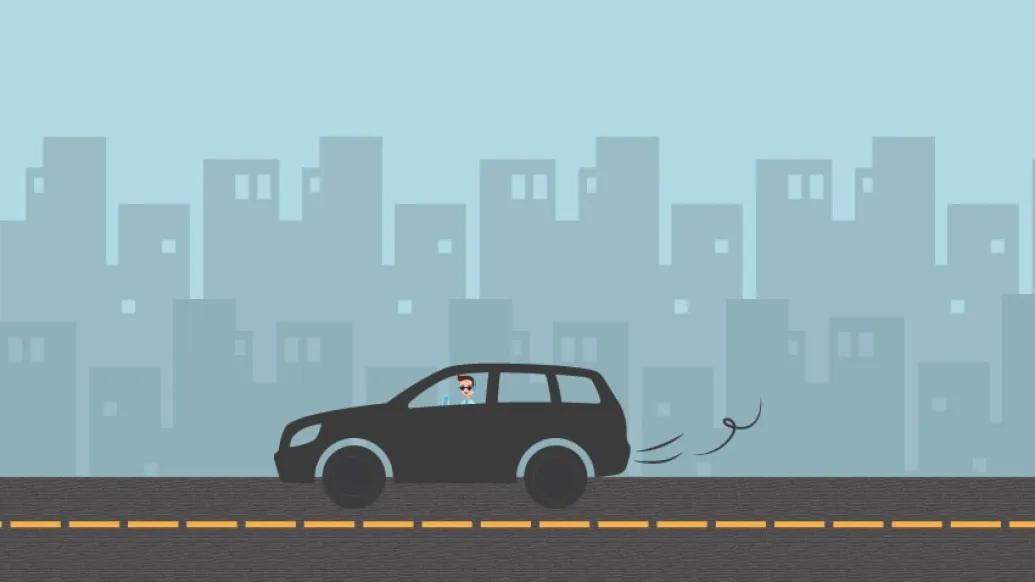
Distracted driving causes almost 60% of crashes involving teen drivers.
The stakes for new motorists, as all families know, are high — but parents can do a number of things to prepare their children to drive safely and follow those habits each time they're behind the wheel.
The Pediatric Trauma Program at University of Michigan C.S. Mott Children's Hospital offers a Drive Smart program with ideas to help.
Additionally, the Injury Prevention Center and the U-M Transport Research Institute have created a Checkpoints program, which is a free, evidence-based program that helps teens and their parents create a First Year Driving Agreement that helps them stay safe.
“Teens have an elevated risk for being involved in a motor vehicle crash in their first year of independent driving. Parents and other guardians are fundamental to helping teens stay safe during this high-risk time,” said Patrick Carter, M.D., Professor of Emergency Medicine.
“Evidence-based programs such as Checkpoints can help facilitate a discussion between parents and their teens about these risks and enable them to practice skills that reduce the risk of crash and injury.”
Use these four strategies to help your family drive safely:
1.Model good driving behaviors
The day you turn your child's car seat from rear-facing to front-facing is the day you start teaching your child how to be a safe driver.
Kids can be observant little sponges; even the youngest minds can grasp the concept of good driving behavior.
A few lectures on the dangers of distracted driving won't easily replace years of watching mom and dad eat, text, check emails or act aggressively while driving.
Be a role model for how you want your child to behave when he or she is driving.
In fact, invite your children to hold you accountable as a safe driver.
Teach them to offer to do tasks for you and free you up to focus solely on the road.
2. Remove all distractions — not just phones
Fifteen percent of teen distracted driving accidents are related to the driver attending to the other passengers in the car — sometimes just talking.
Anything that takes a driver's eyes, hands or focus off the road is a distraction.
Dangerous behaviors include eating or drinking, looking for something in the vehicle and using an electronic device for music.
Remind your teens that their interactions with others in the car can be incredibly distracting, even if it doesn't seem like it to them.
Furthermore, encourage your children to be safe passengers. Remind them to avoid engaging the driver in distracting conversations and activities. They can offer to adjust the temperature, answer phone calls or send texts for the driver.
Download and discuss the Drive Smart Tip Sheet with all family members and families of your children's friends to help ensure a safer ride no matter who drives your children.
Drive Smart also offers a free Distracted Driving Toolkit, which includes a Cell Keeper bag so your teen can stow away his or her phone while driving (request it via the Drive Smart homepage).
3. Know (and follow) the law
Michigan has a graduated license system.
That means a teen's driving privileges gradually increase as he or she advances through the system.
The restrictions were created to protect teens while they're learning to drive.
Don't let your child tell you that no one follows those rules.
If your child is driving without an authorized adult, the rules for a Level 2 license are that the teen:
- May not operate a vehicle between 10 p.m. and 5 a.m., except when driving to and from work or another authorized activity (such as school extracurriculars)
- May not have more than one passenger in the vehicle who is younger than 21, with the exception of immediate family members
- May not use a mobile phone (no texts or calls)
4. Communicate early and often
Don't just rely on a driver education's course to teach your teen about safe driving practices.
Explain your expectations and the consequences of not following the rules.
SEE ALSO: Parents' Top 10 Children's Health Concerns (and How to Handle Them)
Drive Smart has developed a Parent-Teen Driving Agreement to help jump-start a conversation on distracted driving.
The agreement is a great excuse to have a real conversation with your teen driver.
But do more than sign it: Go over the agreement in detail with your new driver and customize it to your teen's situation.
Like most topics, safe driving isn't a one-time conversation. Revisit the topic frequently.
To learn more, visit the Checkpoints program, an evidence-based teen driver safety program designed for the first year a teen receives their driver’s license, when they are most at risk for a crash.

Health Lab
Explore thousands of health news & research stories by visiting the Health Lab homepage for more.
Media Contact

Public Relations
Department of Communication at Michigan Medicine
In This Story

Patrick M Carter, MD
Professor
Stay Informed
Want top health & research news weekly? Sign up for Health Lab’s newsletters today!
Featured News & Stories

Small comforts make a world of difference

High dose oxytocin protocol linked to lower postpartum hemorrhage rates
Paralyzed from waist down as a child, patient walks across stage at high school graduation

U-M-led consortium to receive up to $52 million in NIH funding to study why viral respiratory infections affect children differently

Emergency room intervention pairs smartphone, telehealth counseling to reduce risky firearm behavior