Pathology’s Role in Cancer Care
From diagnosis to easing patient's anxiety, pathologists are a key part of the care team
6:30 AM
Author |
View the transcript
After a patient has a biopsy, the samples are sent to pathology to determine if it is cancerous or not as well as how aggressive it is. Many patients will see their results before hearing from the medical team in their patient portal – leaving them anxious or confused on what it all means.
Pathologist, Dr. Cathyrn Lapedis, talks about the role of pathology in a patient’s care plan, as well as new ways to help patients when they get results before their physician is able go over to help them with anxiety and to be better informed about their potential diagnosis.
Participant:
Resources
People find medical tests hard to understand, increasing overall worry
Pathologists aid in patient understanding and quality of care
Transcript
Scott Redding:
Welcome to the Cancer Aware podcast, where we'll discuss cancer prevention treatments, the latest in research, and important news around cancer, brought to you by the University of Michigan Health Rogel Cancer Center. How is cancer identified and staging determined? We're discussing just that with Michigan Medicine pathologist, Dr. Cathryn Lapedis. Welcome, Cathryn.
Cathryn Lapedis, MD:
Hello.
Scott Redding:
Let's start with how cancer is identified.
Cathryn Lapedis, MD:
So cancer is typically identified usually via biopsy. Could be during a surgery also, but typically it's a biopsy and there's something that's abnormal. The clinician, who's the patient's doctor, they see something, maybe it's a scan or lab value, and they say, "This is worrisome. We want to figure out what this is." And so often in that case, they'll do a biopsy to see what's going on exactly with the tissue. And that's the way a lot of cancers are discovered.
Scott Redding:
Once that biopsy is done and they've determined that there's something wrong potentially, what is the next step after that biopsy?
Cathryn Lapedis, MD:
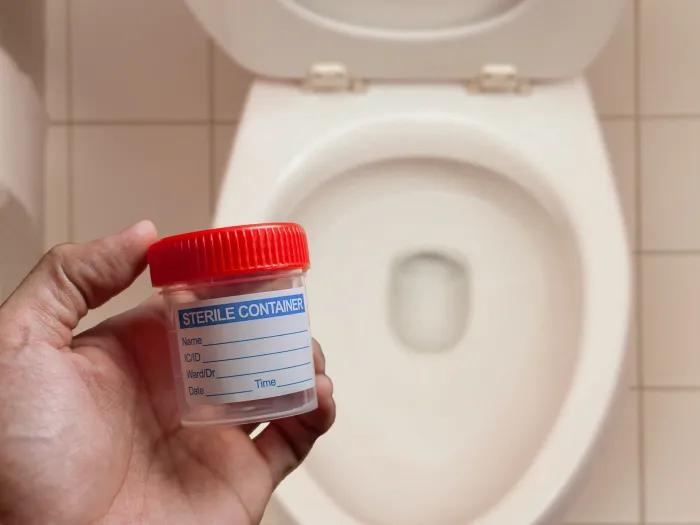
The biopsy will come to the Department of Pathology, which is where I work, and we will carefully take a look at it right as it comes out of the person, what it looks like then, and then we'll also do what we call, process it. That means that we'll put it in a solution that will make it harder. We'll put it into what's called a paraffin block. That's all part of our processing. And that makes your flexible tissue into a solid piece of tissue and wax that we're able to slice. Think about a deli slicer. We take that little tissue and we slice it. We get those thin pieces of the tissue and we put them on glass slides, and then we use what's called staining to give it color, and that color helps us really see what's going on in the tissue. And then we will put it under the microscope and take a look at it, and that begins our diagnostic phase as the clinician.
Scott Redding:
So when you're looking at that slide and you get in really close with the microscope and look at it, how do you determine whether it is cancerous or not, and/or what level of cancer it might be?
Cathryn Lapedis, MD:
Yeah, so every cancer is a little bit different, and most cancers have an earlier phase, which is like, it looks abnormal but is not quite cancer yet, and then a phase where they're definitely cancer, and then a phase where we are sure it's an aggressive cancer and we're worried that it might have spread to other places. Those are the phases that we're looking for. And we start off by knowing what normal looks like. We know what normal looks like in all different types of people, in all different types of conditions. Then we take a look at, okay, what are the things that bring us to cancer? For prostate cancer, we're looking for loss of a basal cell layer, typically, the nuclei, which are the brain of the cells, looking abnormal. And sometimes we see features like mitotic figures that tell us when the cancer is growing. Those cells are growing fast, they'll have mitotic figures, which means that they're replicating. All of those things are examples of things that we look for under the microscope.
Scott Redding:
When you look at those items, how in depth of a diagnosis can your report back to the physician or to a patient be? It's just based off of looking at and comparing?
Cathryn Lapedis, MD:
Yeah. The report is usually very detailed. We have certain national standards for different types of specimens that we have to report on certain things, and in almost all of our reports things are very detailed. We want to give the clinician all the information they could possibly need in order to effectively treat that patient or effectively follow that patient in a good way if that's what needs to happen.
Scott Redding:
There's a lot that the pathologist does after the biopsy to help determine how aggressive the cancer is and whether they have cancer.
Cathryn Lapedis, MD:
Yep.
Scott Redding:
Would you say that the pathologist might be the unknown team member of the care team?
Cathryn Lapedis, MD:
I think that we are very well known to our clinical colleagues. A lot of times people think of a pathologist as the doctor's doctor. When you're not sure what's going on with the patient, you take the tissue, you send it to the pathologist, and then we have a conversation. I'm a medical renal pathologist primarily, and every day I talk with clinicians about what's going on in their patient. We develop a team plan for that patient based on what's in the biopsy, and sometimes we'll even talk about treatment together.
And so I would say that the pathologist knows the patient. Most of the time I know my patient's chart pretty well. I've looked through everything. I even probably know how many kids they have or things like that because we just pick it up because reading really in depth about our patients. But the patient doesn't know us at all. So the clinicians and doctors know us well, and we know the patient, and the patient doesn't know us. So we are definitely behind the scenes, but we are a strong part of the patient's care team, and we're always thinking about the patient and thinking about what's best for them.
Scott Redding:
Now, do you think because of that, because you're behind the scenes and you know the patient so well, do you think that patients would benefit from knowing the pathologist?
Cathryn Lapedis, MD:
Yeah, I think that that depends on the goal of that interaction. Sometimes it's really nice to have someone who's behind the scenes, we can be a little bit more objective, go through a fair number of biopsies in a day, versus if we were seeing all of those patients we wouldn't be able to get through those, and that would be a longer turnaround time for the patient. I do think that there are specific situations in which it's really, really helpful to get that additional knowledge from a pathologist. I do a clinic at the VA where I meet with people who are newly diagnosed with prostate cancer and I review their entire diagnosis, as well as how prostate cancer is graded and what their cancer looks like under the microscope. And I look at their report. I go through their report in a really detailed way, so that they can have all the information that they need to make a decision that's in line with their values.
A lot of times, prostate cancer patients and other patients, there's a bunch of different options, but the patient is really the one who needs to decide. So I think especially in those situations, it's really helpful that we ensure that the patient has all the information that they need about their specific diagnosis, so that they're going into those decisions really, really informed about their diagnosis so they can make a high-quality decision.
Scott Redding:
With that being said, and with this clinic that you have at the VA, I know when people get reports, a lot of times they get them before their physician can talk to them, and so they don't know what's going on. Does having a clinic like that help benefit people to understand more about what those reports are when they get it in their portal or other communications?
Cathryn Lapedis, MD:
Yes. Our research shows that there's a big change in understanding. We did some pre and post interviews, and patients really are not understanding much at the beginning. We also have some research that shows that if you just show regular everyday people pathology reports and ask them to just identify whether or not this report even shows cancer, 39% of people were able to accurately identify when a University of Michigan prostate cancer report showed cancer. That's really low. And so we know that people are struggling with understanding those complex reports. We are working on tools to develop so that we can give better patient-centered information to people throughout this diagnostic process. We have found that if you could meet with an individual pathologist, that you do really gain a lot more understanding. And it also, especially in my clinic and men who are struggling between a decision of active surveillance or actually doing treatment, really understanding what exactly is going on in my biopsy can help those men feel more comfortable in choosing active surveillance.
And so there are definitely times that that can benefit, but there are not that many pathologists and there's already a lot of workload for pathologists. So what I'm really interested in doing in my research is develop tools that we could distribute to everybody that everyone could get, so that they could understand what their report is saying at that moment when they get their report, because it's a very confusing and anxiety-provoking time for most patients. And most patients now are seeing their reports prior to their doctor discussing them with them, and often even before their doctor's able to look at the report.
Scott Redding:
Can you describe what these tools might be, because I know when I look at ... I've not had a pathology report. When I look at my test results, half the time I'm Googling what that might be. But what are these tools that would be available for patients that you're looking to create?
Cathryn Lapedis, MD:
Yeah, the first thing that we're working on right now as part of a quality improvement project with Weiser Center for Prostate Cancer is a patient-centered pathology report. This has been developed by John Gore at University of Washington and tested a bunch of different places. There was a great study at University of Toronto recently on this, and really shows that these patient-centered pathology reports, they would be something that would be added at the end of a typical pathology report. All the information that the doctor typically needs and gets would be there, but then there would be the supplemental below that would say, "A patient-centered pathology report," and then give detailed information but in layman's terms, like, how bad is this cancer? The risk level is low, intermediate, or high. What is the Gleason score? Which is something that clinicians are going to talk about all the time.
Another tool that I'm interested in developing is taking my VA clinic, the Pathology Explanation Clinic, and seeing what videos I could develop specifically, that it wouldn't be as tailored and it wouldn't be as interactive, but maybe it would be really helpful for people just looking for good information. Because yes, a lot of people are taking their report and they're copying words into Google. They're copying and pasting the whole thing and dropping it into AI. And we know that that can be useful for some patients, but we also know that, I believe the most recent article that I saw said about 85% of the time AI is right, but 15% of the time it could be inaccurate or giving some mixed information. And so we really want to be able to get high-quality, clear communications out to patients at this time when they're getting their biopsy results.
So yeah, patient-centered pathology report is one of the tools. Pathology Explanation Clinic is another tool. But also I'd love to develop some videos that could go along with the biopsy report that would give that Pathology Explanation Clinic level of detail without every patient having to meet with their pathologist, because we just don't have the resources for that unfortunately.
Scott Redding:
Take us through what the report says, and then when you look at it from how you want to incorporate these different tools to make it easier for the patient to understand, what that would look like.
Cathryn Lapedis, MD:
Great. When there's a standard report, the first thing that the patient will see is if the patient has cancer, and we'll use prostate cancer as an example, they would say prostatic adenocarcinoma. In the patient-centered pathology report, it would just say prostate cancer because that's the more layman term, the more typical, plain language term. Then we would in our standard report, we would then grade the cancer. That's a complex table with many numbers and percentages and really, really complex and hard to get your head around. And it's also not distilled at all, so you'll see a bunch of different scores for a Gleason score if there's multiple cores positive. What a patient needs to know is actually what's their highest Gleason score.
So the patient-centered pathology report would say, what is the grade of the cancer, how much cancer is there, how bad is this type of cancer, and it would outline specifically the Gleason score, the grade group, and then the risk level. And those things are all the distilled version of what a patient needs to know about their cancer. And then they can do some more research on their own at that point or they're very prepared to have their conversation with their treating clinician.
Scott Redding:
The PSA, does that give you the Gleason score or does a pathology report give you the Gleason score?
Cathryn Lapedis, MD:
The PSA is the blood test that tells us what's going on in the prostate. The PSA measures a specific protein that's made only by the prostate. So when that goes up, we know something's going on with the prostate because it's the prostate-specific antigen, it's something that's only made in the prostate. When that's increased, we don't know if it's because of inflammation or because of a cancer, and so what we'll do is, do a biopsy. So not everybody who has an elevated PSA has cancer, and not everybody who has a normal PSA doesn't have cancer, conversely. It's sort of a screening tool. So the biopsy, when you get that result after the pathologist looks at it and analyzes it and writes the diagnosis, communicated via the report you'll see a Gleason score. If there's multiple spots in that prostate that are positive, there may be differing Gleason scores.
And the Gleason score is made up of two numbers and they're both the patterns of cancer that we see under the microscope. The first number is the most common pattern, so that's what most of the cancer is made out of. And the second number is the less common pattern, and that equals a total score. But it's really important to remember that the order matters. So if you have a three plus four, that means you have more three than four, three is lower grade than four, equals seven, versus if you had a four plus three equals seven, the four is a more aggressive. And so there's more four than there is three, and that equals a total of seven.
The Gleason scoring system itself is very complicated for patients to understand, which is why they layer on this additional type of grading called the grade group. So somebody can have a three plus three equals six Gleason score and then a grade group of a one out of five, and that alone is just confusing. So I would love to develop some videos where we could walk through this with visuals showing step-by-step, how did I even get this score?
Scott Redding:
So when a patient gets the report, whether it's before or after talking to a physician, what is some advice to help with calming some of that anxiety until they understand it?
Cathryn Lapedis, MD:
Yeah, I would say the first step is to, even before your biopsy when you're having your visit with your clinicians, say, "What kind of things am I going to be looking for on that biopsy?" And this is for every person. "What things am I looking for?" They may say, "If you see prostatic adenocarcinoma, that means there's cancer," or, "If you see benign prostate, that means there's not cancer." They might be able to give you those basic things of cancer, no cancer. So at least you know where you are in those categories. And they also may be able to give you some resources beforehand so that you can better understand things.
The second thing I would say, is that I really recognize that the report formats are very, very difficult to read, and so to not expect that you're going to be able to understand most of it. Some patients are reassured just by the fact that they had the biopsy, they got a ping that said the test result came back. They say, "Okay, it's back. I'm just going to wait now." But for a lot of patients it's really hard to wait, and almost impossible, even though you get this ping on your phone and people are just like, "I'm going to go look at it." Having some prep beforehand about what I might be looking for in the pathology report is really helpful, and you can get that from your doctor who's going to do the biopsy.
And then I would also ask, "About how long is it going to take for me to get a call back? Are we going to have a visit scheduled a week afterwards? Is it going to be two weeks? Are you going to call me right on the day?" I think getting some understanding of when you might get that call from your physician can also help alleviate some of that stress and anxiety. And you may say, "I don't want to open it because I know I'm having this visit at this time," or at least have some structure around it.
Scott Redding:
So earlier you mentioned about your research. How did your research come about in order to look at better ways to communicate pathology reports to patients?
Cathryn Lapedis, MD:
Initially, we have a patient family advocacy group in pathology, and this was one of their areas that they really wanted to stress. They said it's important for patients to know pathology exists, understand how to read their pathology report and know that pathologists are part of their care team and willing to talk with them and interact with them. And then as a researcher, I realized there wasn't very much in this field. So every time I would try to write a grant or figure something out, I said, "We don't even have basic numbers on whether people are understanding this data or not." So that led me to do a study that just said, "Let's take people from all over the country and have them look at these report formats and see what information they can just extract from them." And in that study, we learned that only 39% of people could understand or identify when the report showed prostate cancer.
And so we looked at other formats of reports to see if that would help. We said, "Okay, we want to see if the problem's as bad as we think it is?" Which we showed yes, it's a bad problem. And, "Is there any way that we could help it?" And so we looked at a different format of report called the Patient-Centered Pathology Report, developed by John Gore at University of Washington, and we tested that type of report and we saw that whereas less than half of people could accurately understand that the report showed cancer with the standard reports, 93% of people could understand that there was cancer from the patient-centered pathology report. They also had higher numbers of identifying the correct Gleason score, 84% compared to less than half in the standard reports. And 93% of people were able to identify the correct risk level for their cancer, as compared to less than half in the standard reports. So that really showed us that, number one, there's a big problem, and number two, a patient-centered pathology report can get us towards people being able to identify these important parts of their pathology report.
Scott Redding:
From this research, what is being done either here, the VA, or in other institutions in order to address those needs? Are patient-centered pathology reports now being incorporated in the reports, or is that also part of what you're looking at with these potential tools down the road?
Cathryn Lapedis, MD:
At Michigan, we're testing patient-centered pathology reports right now for prostate cancer patients, and we just actually finished up our first quality improvement study here, our project. And I'm also studying our VA quality improvement project there, which uses pathology explanation clinics where the pathologist directly meets with the patient. Across the US, there's small groups of people who are really interested in this. It's still pretty small, it's still pretty early, but there are places like University of Toronto who have just tried to roll this out. We're still figuring out the logistics and the systems and how we all get this to work together. But I'm really hopeful that as time moves forward, we'll be able to have more of these tools incorporated into pathology.
We as pathologists will think of our role not just as the doctor's doctor, but also as the clinician for these patients that we're diagnosing as well. So we'll have a shift in our mindset as to who is our audience. Typically, traditionally, it's just been clinicians and other pathologists, but I think that we should open our mindset to include patients as an audience to our reports.
Scott Redding:
The other research and your current role is primarily prostate cancer. Is there a goal once more research is done that these patient-centered reports get incorporated into other cancer types as well?
Cathryn Lapedis, MD:
Yes, definitely. As I said, my clinical work is primarily as a medical renal pathologist, but my research is in health communications, which is why I started in prostate cancer, because it's a diagnosis that has so many varied levels of what you need to do and so much is dependent on what the patient prefers. And so I really thought that that was a great place to start doing some patient-centered communication work. I hope that we can create a model in prostate cancer that can be used in all other fields. I've stuck with prostate cancer because I've learned about it this whole time and I know it pretty well at this point, and I'm hoping that once we get things in a good place with prostate cancer, we can replicate that to other fields. And every field will be different, but my hope is that we can incorporate these types of patient-centered pathology reports in all fields in the future.
Scott Redding:
Cathryn, I really appreciate all the information you've given us today. What would be the biggest takeaway for anyone who is potentially getting a pathology report to know, and how to alleviate any anxiety or concerns?
Cathryn Lapedis, MD:
If someone's getting a biopsy, I would say, first of all, it's always an anxious time to get a biopsy, so having your regular good supports with you is always important. If it were my family member getting a biopsy, what I would tell them is, "Talk to your doctor about specifically what you expect to see in that pathology report. What are going to be some key terms?" Like prostate cancer patient, is it going to be prostatic adenocarcinoma, which means prostate cancer? If I see benign prostatic tissue, what does that mean? That means not cancer. So even just getting those big categories like, "Well, I know cancer, no cancer from this."
Other things I would talk about are, from the clinician perspective, "Are there any other words or things I should know, things I should be looking for?" I don't think in our standard pathology report format that it's actually possible for patients to pick out the Gleason score, so it might even be like, "This is going to be a table of a lot of numbers and you're not going to be able to understand it. We'll go through it together." So getting that information ahead of time so that you're not scrambling and throwing it into AI and trying to figure it out.
And then collecting some resources if you want to understand different things about different Gleason scores or the grading or all of that upfront, asking your doctor for some resources on what am I going to see and what is it going to mean? And then I would say the last thing would just be getting some expectations on when you're going to get some follow up from your doctor. Will it be a week later? Will it be within a day or two of the report coming out? Just so you have an idea of when I expect to hear back.
Scott Redding:
Great. Thank you very much.
Cathryn Lapedis, MD:
Thank you.
Scott Redding:
Thank you for listening and tell us what you think of this podcast by rating and reviewing us. To stay up to date on what's happening in the cancer world, follow us on X, @UMRogelCancer. You can explore additional episodes at www.rogelcancercenter.org/podcasts.
Cancer Aware is part of the Michigan Medicine Podcast Network.

Cancer Aware
Listen to more Cancer Aware podcasts - a part of the Michigan Medicine Podcast Network.
Featured News & Stories
New drug combination may help treat advanced prostate cancer

From journalist to parent to advocate

Long friendship inspires urology resident fund
Researchers create new path to target hard-to-drug prostate cancer protein
Giving with gratitude: planned gifts support nursing, research, and patient care