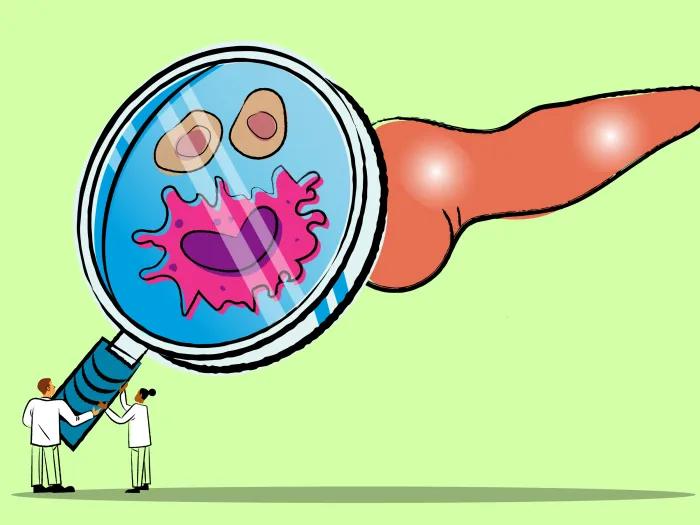
Metastatic Spine Cancer
Michigan Medicine neurosurgeon, Nicholas Szerlip, discusses cancer metastasis to the spine and how the Rogel Cancer Center is addressing this through their Metastatic Spine Oncology clinic.
Transcript
Scott Redding (Cancer Aware Host):
Welcome to the Cancer Aware Podcast, where we'll discuss cancer prevention, treatments, the latest in research and important news around cancer, brought to you by the University of Michigan Health Rogel Cancer Center. Today we're with neurosurgeon Dr. Nick Szerlip of the University of Michigan Health Rogel Cancer Center Spine Oncology Program. Welcome Nick.
Nick Szerlip:
Thanks for letting me talk about this.
Scott Redding (Cancer Aware Host):
Now I did have a first, kind of, initial question because when you think of spine, you think of bones and then you hear bone cancer. Is spinal cancer the same as bone cancer?
Nick Szerlip:
Yeah, so I mean it's a big question and it's somewhat confusing, I think, to patients at times. Spine cancer to me is a very broad term that has a lot of different pathologies underneath it, that name. And so I don't really use the term spine cancer because it doesn't really describe anything specific. So if someone has a disease that comes from somewhere else that goes to the spine, I kind of use the term
metastatic spine cancer. And then this usually does go to the bones of the spine but can also go to the soft tissues around the spine. It can be in the spinal canal.
So then I usually use the, what is their primary, so it usually goes to the bone, but the clinical outcomes, what really matters to the patient is really determined not by going to the spine but by what the primary
disease is. So is it breast cancer? Is it prostate cancer? So I usually say metastatic prostate cancer to the spine because the metastatic origin is really what makes a difference to the patient clinically long term.
And then the term bone cancer, I usually save for specifically cancers that originate from the bone, which is another category under spine cancers, but that would be something that originates from the
spine bones themselves.
Scott Redding (Cancer Aware Host):
You talk about this as being from a metastatic standpoint, so cancer moving to the spine. When that happens, and I'm asking this from the standpoint because you're a neurosurgeon, when that happens, is
that because it affects the neurologic aspect of it or is it because the bone part of the spine and the various different neurological issues that are related to the spine?
Nick Szerlip:
I mean we're involved with it because, yeah, because of the risk to the neural elements and thus the function of the neural elements which on the spine is, could lead to paraplegia or something else. So the stakes are high no matter the modality of treatment. And so what we've done here has involved neurosurgery running the show to lead the charge and make sure that the spine remains safe at all times, even though the treatment modalities may not be neurosurgery and in fact most often are not surgical.
So even though we run the multidisciplinary program and I do a lot of the lead for the treatment of the disease that goes to the spine, probably only one out of ten people will actually need surgery to the spine itself to alleviate the problem. But being as how that would be the ultimate problem, if it was compressed and it needs to be something emergent, then it would need emergent decompression one way or the other. So we lead the charge even though most of the cases don't require surgery, but sometimes patients are a little put off when they come to my clinic because they're seeing a neurosurgeon, but most of them don't need surgery.
Scott Redding (Cancer Aware Host):
You made mention about the multidisciplinary program. Can you explain a little bit more about that and obviously you talked about it from your view from a neurosurgeon, but what entails the entire program?
Nick Szerlip:
Yeah, so we call it a multidisciplinary spine program because disease that goes to the spine is so complicated. There's a lot of variables that go into taking care of patients with spine disease. And so the multidisciplinary program really just means that it's trying to make the care seamless for the patient that's involving their oncologist, the radiation oncologist, the interventional radiologist who we use for
procedures. We also have physical medicine and rehab involved. So these are all the treatment teams that are going to help treat whatever the patient needs for the instance that they have. So they come to
our clinic specifically, they see myself in radiation oncology. Most of the treatments are going to be one or the other or some combination, and then we involve their oncologist as well in the treatment plan
because it has to be worked around their systemic therapies or something else that they have that might limit whatever we do.
So we work, those three pretty work seamlessly together and then we involve the rehab medicine or the interventional if we need more minimally invasive approaches to be done and we'll involve them, and
it's just really to make the whole experience much better for the patient. So they don't have to come to our clinic or my clinic then be sent somewhere else a week later and be sent somewhere else a week
later from that. So it's really, we're trying to take charge of their care and put everybody together on the same page. That usually means, I'll see the patient with radiation oncology and then I'll send a group email out to their treatment teams trying to put it all together saying, hey, we just saw this patient, they have A, B and C. I know they have this going on, this going on. From our perspective, we see this, but what do you think about it and how can we help the patient and how does it work with what you're doing?
Scott Redding (Cancer Aware Host):
So you briefly mentioned metastatic prostate cancer a little bit ago when you were talking. Is there a type of cancer that is more prevalent to metastasize to the spine?
Nick Szerlip:
Overall, the prevalence is pretty high. So metastatic disease in general will affect about 40 to 50% of cancer patients. Like, actually have a clinical effect. In some autopsy studies they see disease in up to 70
to 80% of cancer patients, but 40 to 50% will actually have some clinical effect from disease in the spine, whether that's pain, mechanical instability, some neurologic issue, so it's going to most likely play a part
in their treatment course. Cancers that are more common to metastasize to the spine are lung, breast, prostate, melanoma, and kidney like renal cell. Prostate and breast though really love the bone. So we do see them a lot more than others, other cancer types.
Scott Redding (Cancer Aware Host):
Do you treat it as a spine tumor or do you treat it, you talked about the multidisciplinary and keeping the patient's oncologist involved, but do you treat it as breast cancer, in essence, if it's a metastatic breast cancer that's led to the spine, do you treat it from the standpoint of we're treating breast cancer or are we treating it as a spinal tumor? And I ask that because I know in previous conversations, a lot of times when it's spread and it's become metastatic to other organs, a lot of times it's still treated as that original cancer.
Nick Szerlip:
Yeah, so our treatment algorithm takes in numerous variables as I said before. Histology is one of those variables because it basically is based on, we wrote a paper and published it alphabetically, it's like MNOP, it was mechanical stability. So that part is regardless of histology, whether if the spine is mechanically unstable, then we have to treat that a certain way. The neurologic compromise, the end of that algorithm is neurologic compromise, meaning how much compression there is on the spinal cord, takes into account histology a little, and then the O is oncology is histology. But really what we need to know about that histology is how responsive it is to therapies. Sometimes the specific histology is very
important like certain lymphomas or myelomas, but really how responsive it is to the radiation therapy or the systemic therapies, cause that will determine how we treat that in the spine and then we can kind
of bend them.
So there's a big difference between lymphoma and myeloma as compared to sarcoma and renal cell, but I'm going to treat the lymphoma and the myeloma kind of together cause they fit in that really radio sensitive category and so we have to not only understand what the specific histology is, but how they fit into these overall categories of myeloma, I can give a low dose radiation to and it will melt away an hour where breast cancer is also very sensitive to radiation, but it's going to melt away in weeks. And so I take that into account with the N, neurologic compromise meaning like, okay, this patient has really bad
spinal compression.
Do I need to decompress the spine in an hour? If I need to decompress the spine in an hour and it's myeloma, I can treat it with radiation. If I need to decompress the spine in an hour and it's breast, then I probably have to do some surgical intervention to decompress the spine. So we take the histology into account in so much as it responds to different treatment modalities when we kind of put it all together to say what do we need to do right now? And what would give the best outcome for the patient, not only for local control but for neurologic protection and palliation of pain and other symptoms that they have.
Scott Redding (Cancer Aware Host):
What is the main type of patient that comes to see you and what is it usually for? Is it for pain management? Is it for other issues or is it really just to help with some of the pain due to the spreading of the cancer to their spine?
Nick Szerlip:
That's a hard question to answer and it depends on our relationship with the oncologist. So where we do have great relationships with the oncologists, we get patients as soon as they get a disease in their
spine, and so it's mostly just for surveillance, which we're happy to do. We have a surveillance clinic, separate clinic from the one I do that just follows patients. Cause, again we feel that if we can catch disease early before it becomes a problem, we can treat it less invasively than needing surgery. And so sometimes we see patients when they're already weak, when they already have a ton of pain in their back, we'd like to see patients before that happens. And so right now it runs the gambit and it really depends on the oncologist, depends on the patients where we see them in that disease course and the earlier we can see them, we think, the better. I'm a surgeon I want to operate, but not really. So I'd love to just surveil and get as many patients in as early as possible in their disease so that we can treat it less invasively.
Scott Redding (Cancer Aware Host):
What are the treatment options for a patient coming into the metastatic spine oncology program clinic?
Nick Szerlip:
We have a lot of different options and it really runs the gambit from no invasive, non-invasive at all, meaning like systemic treatment for some histologies or okay, you're there, you have some disease there, it's not causing any problem. Let's let the systemic therapies take care of it versus okay, this is mechanically unstable. We need to do something to stabilize it. And in that bin of treatments we have anything from just minimally invasive cement placement, if the disease is just in one part of the bone and it's causing a lot of pain, it responds really well to cement where we'll send them to their neurointerventionalist for cement placement. Sometimes we can do just something called percutaneous
screws, which is the minimally invasive screw system that we can just do tiny little incisions and then place screws above and below to stabilize the spine that way. That's if there's more involvement in the
spine that's a little more unstable. Then we do have different various degrees of what's called separation surgery where we take some tumor out.
The goal is not to take all the tumor out cause, oncologically, There's been studies that show that that doesn't really help but to take out what we need to get the effect we need, which is based on, do we need to stabilize the spine? Do we need to radiate the spine? How much radiation are we going to give the spine? One of the drawbacks we have, we have this, last 10 years, we've developed this high dose radiation, but the spine is very sensitive to radiation, so you need a little bit of play from the tumor to the spinal cord because the spine, you don't want to give that much radiation to the spinal cord. But our anatomy has kind of helped us out on this in the fact that the spinal cord kind of sits in a water balloon.
So as soon as we take out the tumor around the spinal cord, the water balloon opens up and then that gives us that space to give the high dose radiation.
So right now we have a lot of minimally invasive treatment techniques combined with some radiation therapies if we need it. We even have some heat or cold ablation that we do with neurointerventional to treat tumor that may be in patients that can't get any more radiation. We're looking for new different modalities. We have some stuff kind of in the research hopper right now in very early preclinical stages.
Looking at trying to see if we can do intraarterial chemotherapy to spine metastases, seeing if we can treat or do something with the blood supply of the tumors that may help treat the tumors. So there's a lot of different things to do and that's what makes it so complicated.
These patients so complicated, there's so many different things we can do that you really need a specialist that knows all these different things that can put them all together to come up with a plan that's suited for each patient. No patient is the same because that goes to maybe they're not, they're too frail to go through a surgery, so maybe we do something a little different with patient A or patient B, no matter where they fit into the algorithm because the MNOP, the P of that algorithm is the patient.
And so once we get the algorithm, depending on where they are in their disease course can also change the treatment management and lead us to do different treatment options.
Scott Redding (Cancer Aware Host):
What is the ultimate goal for a patient that comes to the spine oncology program? What is the ultimate goal of that patient?
Nick Szerlip:
I don't know what their goal is, and this is something we talk to patients about. Our goal is symptom palliation, neurologic protection, so increased quality of life and good local control, meaning we want
the tumor in the spine to not cause a problem. And that problem would be pain, neurologic compromise or progression. So we want to take care of the problem in the spine. The tumor in the spine really doesn't have much to do with the overall survival of the patient, meaning that nothing I do is going to make that change the systemic disease, but if somebody's paralyzed or has a neurologic issue or pain, it totally destroys our quality of life. So we want to really make that quality of life as long as possible when it comes to the results of the spine disease.
Scott Redding (Cancer Aware Host):
You mentioned research, some really good stuff, research happening. Can you explain a little bit more about that?
Nick Szerlip:
Yeah, we have a lot of different research ongoing that's part of our program from basic science research all the way up to clinical research. Some of the highlights of that, we're looking at bone microenvironment and trying to see if, what about the bone microenvironment of the spine makes tumors grow in the spine better than other bones? We see that tumors grow in the spines more than they grow in the long bones, like the legs or the arms. What about that cell milieu, that soup that's there
and the bone marrow lets the cancer grow better there than the others spots. So we're looking at that.
We're getting researchers involved with that. We have collaborations at the VA and other bone researchers at the university that are looking into things like that. We have a lot of preclinical things I was talking about with the intraarterial chemotherapy.
Right now, we're just kind of mapping that out and trying to look at if we inject anything, where does it go? Can we put something into the tumor? So we embolize patients pre-op sometimes when they're very vascular. And so we're using that standard of care now that we're doing to kind of map out the vasculature of these tumors in the spine to see if we can get something to stay in the tumor, so for future studies and then later that we can then deliver drugs to tumors. So that's very, very early. We're
also looking at other things like more clinically relevant to patients. Right now we monitor patients every three to four months with a full spine MRI. That's a two-hour scan that patients have to lay very still for and these patients are in some pain. Sometimes that's a very distressing scan.
It takes a lot of time out of their life. So we're using some biometric analysis. We're starting to pair with some companies to see if we can use biometrics, which is like using cell phones and your steps and acceleration and other things to monitor how patients do. So hopefully down the road that we don't need to get or my hope is that we don't need to get scans every three to four months. That there can be other metrics that are constantly going that can maybe predict progression. That's our overall arm of that study that we want to find out. That's going to probably take another three to five years. We're just starting that study now, trying to recruit patients into looking at that and eventually though it'd be nice if your cell phone can then tell you, hey, you should call a doctor. We're seeing some things that might indicate something's going on and I think that'd be great for patients because right now they have also the test anxiety of every three to four months. Oh my god, what's my cancer doing? We want to alleviate all of that, those things.
Scott Redding (Cancer Aware Host):
So you mentioned about the phone. Obviously the way that Apple has moved forward with a lot of their health aspects, there are certain pieces of that. So you see that as a real opportunity down the road and then I guess as a quick follow-up, do you see that the patients are willing to adapt to those type of tools for health measurement and so forth?
Nick Szerlip:
So that's the first part of, that's the thing where I'm in talks right now and we're writing a pilot study to see that is, can we enroll patients? Will they have the phone on them? Will they, that's combined right now we're going to do with PROs, which are patient reported outcomes. Are they willing to fill out surveys every week even though it's a two minute, just quick, how are you doing? What's this survey? How invasive are patients willing, how much are they willing to do?
And so that's what we have to do first before we can move on to look at, can we use the data? We got to make sure we can get the data. Cancer patients are very helpful in a lot of these things. I think if any population would do it, cancer patients will do it. But we'll see and we'll also need to see the variability in the data and the variability of every time a patient gets chemo, those biometrics are going to be lower, so we have to be able to distinguish the signal from the noise of just random variation of their treatments and so that's why it's going to be hard.
Probably be like a national study eventually. It's not going to be something we're going to be able to do just at Michigan, but we want to be able to start the pilot stuff here, get it rolling out, find an app that's
going to really, people are going to work with and be consistent with and then try and roll it out to a bunch of national institutions.
Scott Redding (Cancer Aware Host):
You mentioned about national institutions at least for potential research and partnering and collaborating with them. How many spine oncology programs like this are there, either nationally, internationally, locally, is this a common type of program?
Nick Szerlip:
I think it's becoming more common as we are seeing the benefits of it. When I first got out of training, it was just Memorial Sloan Kettering and basically MD Anderson. And then a few other people would kind of say they had a spine oncology program, but it wasn't as modeled the same
way. And now that we have a lot of Sloan Kettering grads and MD Anderson grads, we're all modeling them in a very similar way using similar algorithms for treatment, which makes collaborating much
easier because we're all doing similar things now.
There's still not that many that are really like Michigan, I don't think. I'm trying to build that network and guide the younger surgeons to do that. Like, we're starting a big 10 consortium for neurosurgery and I'm hoping spine on can be a big part of that, although not all the Big 10 programs have dedicated spine on faculty. And then I'm just reaching out to alumni of MD Anderson and Sloan Kettering. We're trying to just start our own things and get things moving between everyone we know that will treat the patients the same way so that we can do meaningful research.
Scott Redding (Cancer Aware Host):
Really appreciate, really good information today Nick. Can you sum up for the listeners what is the big takeaway for patients either who currently have cancer or might know someone who has cancer or to
think about as it relates to spine oncology and metastatic cancer?
Nick Szerlip:
I think the big takeaway is that metastatic disease that goes to the spine is very, not difficult to take care of, but very nuanced and should be taken care of by somebody in part of a large team setting. And that
anybody who has, this is for oncologists and patients, any patient that has disease that goes to the bone or spine should be seen by a spine oncologist in a multidisciplinary setting. We have data that shows
that we think that patients do better if they're seen in our clinic than if they're not when they have bone disease. So I think it's important that they get to us.
Scott Redding (Cancer Aware Host):
Thank you for listening and tell us what you think of this podcast by rating and reviewing us. To stay up to date on what's happening in the cancer world, follow us on X, @UMRogelCancer. Cancer Aware is part of the Michigan Medicine Podcast Network.

Cancer Aware
Listen to more Cancer Aware podcasts - a part of the Michigan Medicine Podcast Network.
Featured News & Stories

Pediatric brain tumors rely on different metabolic “route” to fuel treatment resistance
Gifts advance colon cancer prevention and early detection
Study explains how colorectal cancer cells maintain high iron levels
Receiving personalized treatment for a rare neuroendocrine tumor
Phase 1 trial of alrizomadlin shows promise in targeting metastatic salivary gland cancers