Cutting edge treatment for advanced colon cancer
Patient undergoes first liver transplant in Michigan for colon cancer
6:00 AM
Andrew Sweeney, now 35, was aware of his risk for colorectal cancer – his mother had had been diagnosed with it when she was 41. When he was 31, a CT scan at University of Michigan Health’s University Hospital revealed that Sweeney had a mass in his colon and potential metastases in his liver and lymph nodes. A colonoscopy confirmed that he had stage 4 colorectal cancer.
After 1.5 years of chemotherapy, his care team began discussing how they could remove the damaged parts of Sweeney’s liver. They developed a colorectal cancer liver transplant protocol from a deceased donor and Sweeney was the first patient to undergo a liver transplant in Michigan for colon cancer. After minor recurrences of tumors in his lung in 2024, which were treated by surgery and radiation, his scans have been clear.
Transcript
Scott Redding:
Welcome to the Cancer Aware podcast, where we'll discuss cancer prevention, treatments, the latest in research, and important news around cancer, brought to you by the University of Michigan Health Rogel Cancer Center.
Ananya Sen:
Today, Andrew Sweeney joins us to discuss his experience with stage IV colon cancer and the importance of patient advocacy. Welcome, Andrew.
Andrew Sweeney:
Thanks for having me.
Ananya Sen:
So let's start at the beginning. What were the first warning signs?
Andrew Sweeney:
Yeah. So I think a lot of it goes back to when I was a kid. I had a family history. My mother had colon cancer when I was young and passed when I was around 15. So I knew there was a potential for something. Always had that kind of looming in the back of my mind. It was probably the summer before I actually was diagnosed. I started to have some abdominal pain, went to go see my PCP.
Initially, it was like, "Hey, let's try to fix your diet maybe a little bit." Admittedly, could have used that anyway, and do a few other little things, see if that works. It's hard to believe when you're 31 that you could have something that advanced. So I try to do all the things that they recommended. Still persisted. So one morning, while we were trying to get ready for school, just the pain in my abdomen was just unbearable. So we ran to the ER, and that's when we had the first CT scan that really confirmed things.
Ananya Sen:
And was that at Michigan Medicine?
Andrew Sweeney:
It was. Yeah. I had established care. My PCP is at Michigan. And so, there was a logical place to go. Plus, we live in the area. We're not too far, thank goodness. So that was definitely a positive for us to have that right down the street.
Ananya Sen:
What were the results from the CT scan?
Andrew Sweeney:
When we first got there, they were treating me just like anybody else, which was great. I could tell though they were kind of leaning toward, "Maybe you're just constipated. Maybe we could give you some meds and send you home." I knew it was something more than that. So I had asked, had seen the attending walk by, and I grabbed them, and I said, "Hey, I think there's something more going on here. Can I please get a CT scan or something?" And he was like, "Yeah. Let me take a look." And he's like, "Yeah. We're going to get that for you."
And at that point, everything is now where you get all of your results on your phone practically before anyone can talk to you. So I was sitting on that stretcher in the hallway and got that initial CT read, and it reads that, "There's a mass in your colon," and suspicious potential metastases in my liver, and lymph node involvement. So at that point, I was like, "Okay. Yeah. I think I know what this is."
Ananya Sen:
Right. And that sounds really hard. Do you remember what you were thinking as you read those results?
Andrew Sweeney:
Oh, I was floored. I remember just dropping my phone in my lap. I was in disbelief. I always knew this was a potential problem for me. My mother was diagnosed when she was, I think, 41. So for me, I was following the conventional wisdom to get colonoscopy 10 years prior to her having been diagnosed. And at that point, I was right in that window. I actually had a colonoscopy scheduled already for the next week. So it was all kind of happening around the same time. And so, did I think that it was going to be that? No, but certainly, it all kind of came to a head at once.
Ananya Sen:
Can you walk us through the next steps? What did they do? How did they reach out to you?
Andrew Sweeney:
Sure. Yeah. I think that from the very beginning, we had a really strong advocate for us in our PCP, Dr. Zelnik. She's been fantastic. She was really instrumental in getting me seen really quickly and getting me into seeing Dr. Krauss and Dr. Hendren. So next steps looked like getting the port placed, having the consultation with the surgeon to remove the mass in my colon, and it really kind of just was a whirlwind at that point. You were going in and having the colectomy. And then from there, it was, you had to recover for a little bit, and then it was right on to starting chemo.
Ananya Sen:
And what was that like, the whole process of going through chemotherapy?
Andrew Sweeney:
It was really tough, I'll admit. As a child watching my mother go through it, I had a certain understanding of what it might be like. I don't pretend to think that everyone's experience in this is the same. Everyone's journey is different. So I knew that while I understood what it was like for my mother, the way it was going to be for me could be quite different, and my experience. Everyone's mileage varies with this type of thing. Right?
But I knew, after our first meeting with Dr. Krauss, that we were in the right place. He didn't use words like, "You have this much time left," or "We're going to try to extend your life by X number of years." It wasn't like a conversation. It was like, "We're going to be aggressive with this. You're young. You're otherwise healthy. We think you can take it. We're going to go hard." And that's what I wanted. I'm like, "I want to go as aggressive at this as I possibly can."
And looking back on it, maybe we were a little too aggressive at first, because right after my first infusion, I ended up in the ER and admitted. I was neutropenic, but then we pivoted. Dr. Krauss came and saw me when I was an inpatient and talked me through it, "Hey, here's how we're going to keep moving forward. We're not giving up." And so, like I said, he's been a fantastic teammate. I don't look at him like... I feel like he's a really active participant in all of this, and he always has been. Him and his PA, Pam, they've been fantastic throughout the entirety of my journey.
Ananya Sen:
And you were the first liver transplant for colon cancer at the University of Michigan. So could you talk us through how that decision was made?
Andrew Sweeney:
Yeah. So I think when we were part way through chemotherapy, I did chemotherapy for about a year and a half, and I'd say, almost a year into that, we started, "What are our options?" The chemo was working. I was having great response. The mets were shrinking. Things were working, but a resection wasn't looking like a possibility. Where the metastases were in my liver, they just weren't great for operating on, and that meant we had to be creative.
We started meeting with surgeons, talking about, "Well, what if we lopped off this lobe and then give it some time, and then went over here..." And it felt kind of like a piecemeal solution, but I appreciated that we were looking at every avenue. Dr. Krauss said, "Hey, I've had some patients start looking into transplant. We haven't done one here yet, but we're trying to get a program started. Also, you're not far away from some other big health systems that could potentially do it for you. See what's out there."
And that's another thing about Dr. Krauss. He was like, "Go and get what you need." And so, I did. I pursued that particular option at other health systems too. In the end though, Michigan felt like the right place to do it. Everything that I've experienced here and the idea of being the first one to do it here, I really had a lot of trust in not only my oncologists, but all the surgeons and all the folks here.
I had good feelings about it, and I wanted to be someone who could open a door. Right? If I could get this done here and be the first one to do it, not only at Michigan, but in the state of Michigan, that might open the door for other people. I think back to my mother and what options she had available to her just 20, however many years ago, and we didn't dream of this as a possibility. So for me, it was like, "I've got to pursue this." And so, I went through all of the workup. I think it was the summer of '23 that I was approved for the transplant here at U of M.
Ananya Sen:
So walk us through what the transplant was and life after.
Andrew Sweeney:
Yeah. So transplant itself, that whole process took a decent amount of time. There's sort of two avenues to go when you think about liver transplant. There's living liver donors. So we pursued that, and we pursued it quite heavily. I reached out to any and everyone who would possibly be a potential donor for me. We had a lot of people step forward and try to be donors for me, but that's a very rigorous and very thought-out process for determining compatibility, and I'm very thankful that it is, both for myself and for potential donors.
You don't want to get in a situation where saving me hurts somebody else, or in any way. I didn't want that on my conscience either. But while we were doing that, we were also pursuing the option of a deceased donor, but that didn't seem to me like an awfully probable thing that could happen, because while my liver was riddled with metastases, it worked really good. I was very nice to my liver. I had a lot of very good labs, and all my liver enzymes were very good.
So I was in a situation where when you're trying to get on the liver transplant list, my MELD score, which is how they determine where you're at on the list, was very low. I was practically at the very bottom of the list, and the transplant team to Dr. Parikh was incredible. There was a time when I got a little sick, and I ended up in the ER again, which wasn't all that uncommon for me back then.
But when I ended up back in the ER, I remember him coming down there and seeing me, and I'm like, "Whoa. Dr. Parikh, what are you doing down here?" because it just seems so out of place. He's like, "Yeah. I'm looking at your labs, and your liver enzymes is not looking very good." And I was like, "Oh, no." He's like, "No, this is great." He's like, "We're going to use this."
I think at that point, we resubmitted my MELD scores. I knew that everyone that I was coming in contact with was doing everything they could to make this happen for me, and that felt phenomenal. And we had a couple close calls. We had a number of calls that fall where you get the phone call, and it's like, "Hey, we think we might have that liver for you. Just hold tight. Give us a bit. We'll let you know." And you're waiting there in anticipation. And then for one reason or another, it falls through.
I think when we actually did get the real call, and that was in January 7th of 2024, I remember thinking, "Is this real? Is this actually happening?" because I've been waiting for this for so long, and we've had so many close calls. "Is this actually happening for me?" And yeah, it was actually real that time. I ended up going in in the middle of the night that night, and they did a bunch of prep, basically, getting you ready for the day, and then going in that morning for the actual surgery.
Now, the tough part about that surgery though, it's a long one. But doing it for colon cancer, one of the things they made us aware of early was that they're going to go in initially and look around and kind of take inventory. I mean, they did a lot of that prior to, all of the workup that I had done over the summer, all the scans, and all that. I mean, they had determined I was a candidate, but they get in there, and they see something that doesn't seem like this is going to work out. They're just going to close you back up and call it, and send you back on your way.
That was pretty nerve-racking. I was very nervous about that, and I could only imagine how that felt for my family sitting in the waiting room, waiting for that call to say, "Hey, we're actually going to do it." For me, time just went by. I was in the OR, and I woke up in the ICU. That was on the day that Michigan football went to the national championship, and we had tickets to go to that game.
And I remember before the surgery getting out and selling my tickets, and I'm like, "I hope some fan gets these." And I sold them for face value, and I was like, "Okay. Well, I'm not trying to make money on this," because I knew that that day, whether the football team won or not, I was winning that day. And luckily enough, they did win. So that was great.
When I woke up in the ICU, I remember kind of coming to and seeing the game playing while I was in the ICU up on the screen, and I remember asking my wife, I was like, "How's it going? How are we doing?" And she's like, "Oh, it's going well." And I'm like, "Okay. Great." And it's like, that just made me relax. The recovery from that surgery was, in some ways, easier than I expected, but in other ways, just ultra-challenging. Any big abdominal surgery, it's going to be ultra-challenging.
But we were in and out of the hospital pretty quickly. We would have been out quicker, but there was a big snowstorm. I was up walking out of the ICU, I think, the next day, and down to the step-down unit. I was recovering really well, and I was also really impressed. I was actually a little bummed out too. Dr. Sonnenday did a fantastic job in the surgery. He was fantastic.
But the scar he gave me, it just looks too good. It doesn't look believable that I had a liver transplant. It's so tiny. So I'm like, "Oh, man, you could have just cut me open a little bit wider. I would've had a cooler scar." But, I mean, everyone did a fantastic job. I was really happy with that entire experience, and then getting home. It took a while. Right? It took a while.
Lots of meds initially, taking so many pills, it seemed like, to avoid rejection. Right? And I continually got fewer and fewer and fewer pills. And now, I think I take something like five pills in the morning and two pills at night. It's not as scary as it maybe first seemed when I initially was discharged.
Ananya Sen:
Thank you for walking us through that. And then after that, did you have any other therapy for the cancer, or was it almost gone at that point?
Andrew Sweeney:
Yeah. One benefit of being a transplant patient is I was kind of under a microscope. I feel like they were paying very close attention to me. Like any other transplant patient, you're going to have labs really frequently afterward, and they were watching my labs really closely, making sure, one, that I didn't have any rejection of the donor liver and that that was going smoothly, but then also that my cancer wasn't becoming an issue.
I was having CT scans every three months, and we were paying close attention to everything, and I had a small... I mean, I don't even know if they would consider it a recurrence, but I had a small spot appear in my lung. I had a tiny little wedge resection of my lung in, I think it was November of '24, and then a little bit of radiation in my other lung the spring of '25, and I haven't had any other treatment since then.
Ananya Sen:
And what does your life look like now?
Andrew Sweeney:
I honestly feel like I'm in better shape than I ever was prior to even getting sick in the first place. When I was diagnosed, I had two young kids. Now, my oldest daughter is eight. My youngest daughter is four, and we have another one on the way.
Ananya Sen:
Congrats.
Andrew Sweeney:
Yeah. Thank you. Yeah. So when I was initially diagnosed, I sort of resolved to saying, "I'm going to go as aggressive at this as possible. I'm going to have a positive disposition. I'm going to try to beat this with positivity." And on top of that, this is just a detour. When I was first diagnosed, we were considering having a third child, and I was like, "This is just a little speed bump. This is a detour from the road we were on, and now we're back."
And I know I'm not completely disillusioned. I know that there's always going to be possibility that other things happen down the road, but I'm going to continue having the same mindset going forward. I know I have a fantastic team. I have the best resources right down the street from me, and I'm going to keep on living my life.
Ananya Sen:
Do you have any advice for patients in terms of advocacy?
Andrew Sweeney:
Yeah. I would just say, for one, listen to yourself, and trust yourself. If something feels wrong, then go and get it checked out. Don't wait. I was in a situation where I was doing the right things, I thought. I was trying to get screened as early as I can. I don't know what else I possibly could have done, but once I started to feel something, I stepped out and I tried to do something about it, and I think that was definitely valuable to me.
I've been incredibly fortunate through all of this. I won't pretend that I haven't been. I've had all the best resources. I've had all the best... My family, my wife has been just completely integral in my ability to being able to get this far and get through this the way I did. Lean on your support people. Let people help you.
I didn't always do that. In a lot of ways, I would sort of push people away when they try to help me. This whole experience has really taught me that when people want to help you, it's because they care about you, and it makes them feel better to help. So trust yourself, listen to yourself, and trust the people around you who care about you.
Ananya Sen:
Are there any activities or hobbies you enjoy, especially having gone through this entire experience?
Andrew Sweeney:
Yeah. I mean, just keeping up with my young daughters is enough. It's a lot. But we love camping. We have a little tow-behind trailer that we like to go on camping trips, do little hikes, and things like that. Love going to theme parks, really enjoy that type of stuff. And when I was on chemo and doing those infusions every other week, I wouldn't have dreamt of being able to do some of those things consistently and not feel like, "Oh, what about the next treatment?" or "What about the next thing that's going to happen?" I don't even think about it.
Ananya Sen:
Is there anything you want to talk about today that I haven't asked you?
Andrew Sweeney:
We need to look more into the rate of incidence of young-onset colon cancer. It's rapidly increasing among young people. I think it's the highest rate of cancer-related death in people under 50 now. There needs to be more attention to this. Me being 31 and having stage IV colon cancer, I understand why people in the ER and my PCPs were thinking, "It should be something more explainable. He is a young guy." My mother was 41. Her cancer wasn't nearly as progressed as mine was when it was discovered. So it makes you raise an eyebrow. Why does that happen that way, and why is this continuing to be more and more prevalent for young people?
Ananya Sen:
Thanks so much for joining us and being here and talking about your journey.
Andrew Sweeney:
Yeah. Thanks for having me.
Scott Redding:
Thank you for listening, and tell us what you think of this podcast by rating and reviewing us. To stay up-to-date on what's happening in the cancer world, follow us on X, @UMRogelCancer. You can explore additional episodes at www.rogelcancercenter.org/podcasts. Cancer Aware is part of the Michigan Medicine Podcast Network.
Cancer Aware is a part of the Michigan Medicine Podcast Network.
Cancer Aware
Listen to more Cancer Aware podcasts - a part of the Michigan Medicine Podcast Network.
In This Story
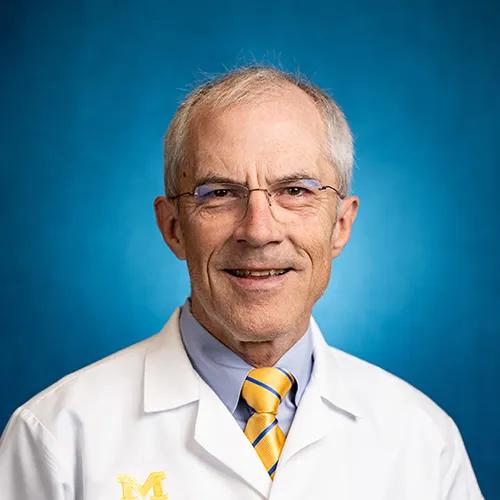
John C Krauss, MD
Clinical Professor
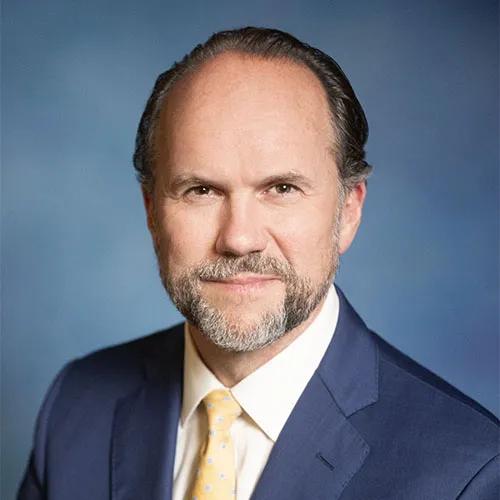
Christopher J Sonnenday, MD, MHS
Professor
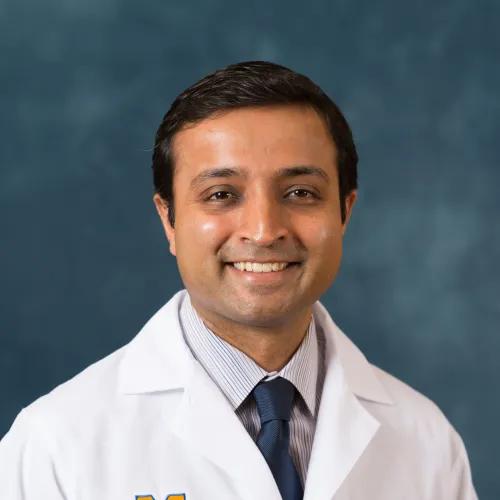
Neehar Dilip Parikh MD, MS
Associate Professor
Featured News & Stories
Continuing the legacy of a doctor’s doctor
Family’s gift honors wife and mother, supports nephrology nurses
A second chance at life
A pediatric epilepsy fundraiser that changes lives
Exceptional response to immunotherapy gives patient with liver cancer more milestones to celebrate