Sensory Processing Disorder, Dyspraxia, Dyscalculia and Dyslexia
Season 4, Episode 2
5:00 AM
Release Date: April 29, 2025 / Termination Date: April 29, 2028
Featured guest: Hannah Reynard, DO, MSc
Objectives
- Define sensory processing disorder and the subtypes.
- Discuss screening for sensory processing disorder.
- Integrate different treatment modalities based on subtype.
- Define the diagnostic criteria for dyspraxia, dyscalculia, and dyslexia.
- Determine appropriate treatment/support modalities.
Resources
- Sensory Processing Disorder Explained. (Child Mind Institute)
- Guide to Sensory Processing Disorder (SPD). (Irish Neonatal Health Alliance)
- Developmental reading disorder. (National Library of Medicine)
CME
Credits available: 0.5 credit
To enroll for CME credit, visit our episode activity website. Visit our CME course overview page for details on CME credit, or complete this survey for social work CEUs.
Visit the Breaking Down Mental Health podcast website for more information about this episode and the series.
Breaking Down Mental Health is a part of the Michigan Medicine Podcast Network. You can subscribe to Breaking Down Mental Health podcast wherever you listen to podcasts.
Transcript
Syma Khan:
Hello, and welcome to Breaking Down Mental Health, a podcast series developed to educate all healthcare professionals on various mental health topics. I am Syma Khan, a Social Worker, and I'm joined by my co-host, Child Adolescent Psychiatrist, Dr. Heidi Burns and Nurse Practitioner, Dr. Christina Cwynar. Today, we are joined by Dr. Hannah Reynard to discuss sensory processing disorders, dyspraxia, dyscalculia and dyslexia. Dr. Reynard is a Clinical Assistant Professor of Psychiatry at the University of Michigan. She's the Neurodevelopmental Clinical Lead of Hospital Services and Associate Medical director of the Nyman Unit. Prior to medicine, Dr. Reynard completed graduate work at the University of Aberdeen in clinical genetics and focused on HACS developmental genes. Her interests include neuropsychiatry and behavioral genetics. None of the speakers here today have any disclosures or conflicts of interests. Thank you so much for joining us today, Dr. Reynard.
Dr. Hannah Reynard:
Thank you. I'm happy to be here.
Syma Khan:
Sensory processing disorder is a condition in which the brain has trouble receiving and responding to information that comes through the senses. Dr. Reynard, could you tell us a little bit more about sensory processing disorders and the various subtypes?
Dr. Hannah Reynard:
Sure. I'll start by just giving a brief background. It was first identified and defined by Occupational Therapist and Educational Psychologist, Anna Jean Ayers in the 1970s. She defined sensory integration as a process by which we organize sensations from one's own body and from the environment, which makes it possible to use the body effectively within our environments. It's basically, as you said, a neurological disorder that focuses on difficulty processing information from the five senses and also displays a difficulty in responding. So basically, if we were to sum it up, we would suggest that it's an issue of accumulation of sensory data, as well as interpretation and then there's a behavioral component as well.
Dr. Christina Cwynar:
How does somebody go around screening for sensory processing disorder?
Dr. Hannah Reynard:
So the American Academy of Pediatrics suggests that if there is a concern that a patient, usually a child, has an issue with processing sensory information, that you would check for other conditions first. You would also want to do a hearing test, a vision test just to monitor there are no other comorbid physical issues. And then a lot of it is based on occupational therapy, observations during play. They also have standardized tests and questionnaires for parents, as well as for children.
Dr. Christina Cwynar:
So you spoke a lot to the overarching umbrella term, sensory processing disorder and a little bit about screening. Could we maybe back up a little and talk a little bit about the subtypes of sensory processing disorder?
Dr. Hannah Reynard:
Sure. When I was looking at the Columbia website, it identifies first of all, different things that you may be looking for. If you have a child who is under responding or over responding to sensory inputs, you may think about needing to screen. Also, it talks about children responding differently when they're touched, or being overly sensitive to odors, or hypersensitive to fabrics, even clumsiness. They have defined three major subtypes, so sensory processing disorder would be the larger umbrella and then the different, I guess, subtypes would be... The first one is a sensory modulation disorder, and those can be defined into further categories of sensory over response, also sensory under responding, and as well as sensory seeking.
Another subtype would be sensory discrimination disorder, and so that would be things like the incorrect processing of sensory information. That would be in the different areas of the census, so incorrect processing of tactile information, or taste, or visual cues. And then the last type would be sensory based motor disorder, and so that would be anything that affects the postural control and coordination. So a subtype of that would be postural disorder and another subtype might be a dyspraxia, which is also known as developmental coordination disorder.
Dr. Christina Cwynar:
I think it's really helpful to understand that sensory processing disorder is a very wide term, but there's some very specific things that we're looking for when assessing children that may have this disorder. And I think just to highlight some of these differences, you may meet a child who has difficulty with, let's say, temperature, and while you or I may feel that temperature and it's clearly warm or cold or even lukewarm, they may be sensing that temperature as one of the extremes.
So for example, I've met a child who kept complaining that the bath was too hot, but parents took the temperature, very appropriate temperature for a bath, but their processing of that sensory experience was that it was extremely hot and relatively painful for them. So knowing that was a flag for us that something was going on. Another example, I think you said about posture, and we've seen individuals who maybe don't have a great sense of where their body is in space. So them meeting some of those other milestones, such as maybe hopping on one foot, they can't do because they aren't connecting where their foot is compared to their body so they can't do it. But it's not necessarily a delay in general, it's because they're not processing that signal. It's very different than what we see in other cases.
Dr. Hannah Reynard:
And that example in particular is helpful because that highlights the issue of proprioception as well, so the knowledge of how your body is in time and space.
Dr. Christina Cwynar:
Thank you. I was looking for the term and I couldn't find it in my head. So now that we've highlighted the different types of sensory processing disorder, how do we treat it?
Dr. Hannah Reynard:
Sure. I'm a psychiatrist. So looking up treatments, they're very much around physical therapy and occupational therapy, helping a child work through the issue of the particular stimulus. And there's one modality in particular that kept coming up in my reading, and that was the sensory integration therapy, which is a stimulation and a challenge for kids.
Dr. Christina Cwynar:
I think it's really important to highlight that this isn't something a medication can fix. It is occupational therapy and physical therapy. And in some cases, I've seen feeding therapy for those kids who have difficulties with texture or those sensations associated with eating. I've had the privilege of sitting in on some of those sessions, so it was very intriguing that for a kid to learn how to tell where their body is in space. So that proprioception that we were just talking about, it was a lot of what looked like fun and games.
It was, okay, let's climb up to this height and see how our body responds. Let's crawl, but we're also going to reach our hand across our body and touch this cone on my left side with my right hand and vice versa so your body starts to reconnect these connections. But for kids, they're able to make it a lot of fun and entertaining and then send parents home with okay, we're going to work on spinning or reaching across their body, or some of these very simple things seemingly, but for whatever reasons, these children can't integrate this feedback from their environment.
Dr. Hannah Reynard:
And I think it's important to highlight, as you mentioned, that therapy would then be tailored to this specific issue for each child, so it's not a one size fits all situation.
Syma Khan:
I appreciate you sharing that this is very individualized because these disorders, while they may fall under this generalized bucket, they really have different interventions that can support the youth, and we can see them be successful with the right types of therapy to regain that integration, that processing of information in the correct way. So I think it can sometimes feel challenging for families initially to navigate, but I think if you can get connected to a good program that really understands these disorders, we can see good success for youth.
Dr. Christina Cwynar:
And I think before we move on, another important comment to make is sometimes as an outsider looking in, you may not realize what the child is experiencing, and that's why this nuanced approach to screening what's going on is really important. For example, oftentimes we'll see individuals present with agitation or aggression. Well, that's because their environment is completely overwhelming and they're not able to synthesize some of that sensory input that's coming in and now because they don't have the language, or maybe they don't understand or they don't know, maybe they're even an older child, it's coming out as aggression or agitation. So I think that nuanced approach and really diving into an individual's experience of their world can help share a lot of information.
Dr. Hannah Reynard:
And also conversely, withdrawal too, or sluggishness from different situations just because of the...
Syma Khan:
And for healthcare providers, I think also being aware of these types of disorders and looking for them. So I think in primary care settings, an emergency department, could these be the root cause of something like agitation or withdrawal from certain activities and things like that because that stimulation is causing distress, and what interventions do we need to then identify to help support these families? So Dr. Reynard, I'd like to switch gears a little bit and talk about some more specific learning disorders, so dyspraxia, dyscalculia, and dyslexia. Can you define these for our listeners and tell us a little bit about how we diagnose these disorders?
Dr. Hannah Reynard:
Sure. So the prefix, the D-Y-S, is basically indicative of an impairment or a difference. So dyspraxia is basically the ability to perform coordinated movements is different for these children. Typically, you would see this in early development. So things like Christina just mentioned about missing certain motor milestones that you might expect. Some may refer to this as a clumsiness that you might see before the age of five. There are some associations between preterm birth and low birth weight, but generally, there aren't... Well, there is also a connection with ASD, but it can also be independent of that.
So similarly for dyscalculia, that would be difficulty with numbers, and that can be seen differently depending on the age group at different stages of development that might look different, what the issues with the numbers are and differentiating what that is for the particular kid would be important. And then similarly for dyslexia, I think we hear that term a lot more colloquially. It's basically difficulty with reading, which can also have different subtypes based on what your actual issue is in terms of either recognizing letters, or different sounds and being able to put them together.
Syma Khan:
Thanks for expanding upon those terms. And I think as you explained them, I definitely was able to connect the meaning to the term, and so I think that was really helpful because I had seen these before, but I did not know what they were. So even I'm learning a little bit today about some of these specific learning disorders, and I think it's important for people to be aware of these terms because they may be things that providers can pick up on early to provide that early intervention to these children or adolescents even sometimes, unfortunately, that may make it into their teenage years without these things being picked up. What are different treatment modalities to address these disorders?
Dr. Hannah Reynard:
So that's a very big question because, again, it requires understanding of this specific issue, which you would do through assessments, but then you need to tailor the treatment for the specific issue. For instance, if you have a child who's dyslexic, after you've done hearing and vision tests, you would also want to know what the specific concern is. So what part of the letter recognition or sound is difficult for them? And then similarly, in terms of treatment, you would tailor it to that specific issue. Where math is concerned, you would want to again, understand the specific issue of number recognition and then be able to address it. So some kids might benefit from things like flashcards, or a different way of demonstrating numbers, like on a dice instead of in a linear fashion. So you would need to understand it for that specific individual.
Dr. Christina Cwynar:
I appreciate that you highlighted every individual's experience with these learning disabilities is very different and understanding that nuance is really important to the treatment because how often do we hear they don't have dyslexia, they don't flip their letters? Which is not an accurate diagnostic criteria, I guess. I mean, it's one aspect of things, but it's not entirely what somebody with a dyslexia may experience. What about accommodations for schools? So we often need to support individuals with learning difficulties in schools. So how can we do that and what can we ask for as healthcare providers?
Dr. Hannah Reynard:
A parent and/or a guardian can request for further assessment in school, typically by writing to the school and letting them know that they would like further assessment for their child. And then I think people hear their terms 504 and IEP a lot. IEP is an individualized education plan that can request modifications of curriculum, as well as accommodations. IEPs are more federally-regulated. They need to be reviewed on an annual basis. And the key there is that you can also request, like I just mentioned, the modification of the curriculum. Whereas, a 504 is mainly focused accommodation and is not federally regulated. In general, IEPs are federally-regulated, as well as federally-funded, and that five-oh-fours are not attached to federal funds.
Dr. Christina Cwynar:
And we have a excellent episode on five-oh-fours and IEPs near the end of the season with one of our learning specialists, Ashley Ellis. So she'll be joining us for that conversation. But I do think it's important for healthcare providers to know that we can also advocate for these families and direct them like, "Oh, okay, you're having a really difficult time reading. Maybe for your reading assignments, you need a space where you can read out loud because silent reading, you can't comprehend it." So asking for those specific accommodations with the rationale why has a stronger argument for those to actually be accommodated.
Syma Khan:
I think one other thing to keep in mind when we're thinking about interventions is that these can be both be school-based and providers can identify community providers too to refer their patients and families to. So I think that for some youth, school intervention is sufficient, but some youth may need supplemental intervention too in community settings. And so they may go to a private practice, OT clinic, PT clinic, those types of things to be able to get more intensive support. Also, sometimes it can be important to keep in mind things like early on, they can provide a lot of intervention if we're noticing or becoming concerned about a sensory processing disorder to get that intervention, again, early because we know that can lead to the best outcomes. One thought that I had or question is what are key takeaways for healthcare providers, not only mental health providers, but people that work in primary care settings or in emergency departments to be aware of or think about for sensory processing disorders?
Dr. Hannah Reynard:
Well, I would say that the big psychiatric elephant in the room is that these disorders are not in the DSM. Reviewing literature for this podcast, it was interesting that there are quite varying opinions of why that is. Some would highlight that potentially in ADHD you talk about the hyperactivity component, like the fidgeting and the tapping, that maybe there's a missed opportunity of understanding further why that is, or what's going on. And in particular, there are a few more studies that have highlighted that potentially that we're missing a component of sensory concerns in the ADHD population that we have not identified previously, and that might actually go along the diagnosis and it may not necessarily be independent of it. It's a limitation of the diagnostic characteristics, rather than maybe an independent diagnosis.
Where my interest would be is, and obviously the other, I guess, big elephant would be that some may associate all these sensory differences with autistic traits and you can have sensory issues that are independent of an autism diagnosis, but there are some genetics studies to show that kids and adults with sensory issues might also have similar genetic changes that are also associated with autism. It might be like for me, as somebody who likes to read and learn about genetics, I think the bigger question for me is are we limiting the DSM or is the DSM limiting these characteristics, and is there a genetic etiology of these things that would explain the clinical presentation in a more specific way?
Syma Khan:
I think it's helpful to be aware of that background as well because often for mental health providers, DSM, or the Diagnostic and Statistic Manuals is what we rely on and we look to, but we also recognize that there's an overlap between these disorders and mental health conditions. And the DSM is insufficient sometimes to meet the needs of our patients and families and diagnose them with the appropriate disorders. And so really having that multidisciplinary team seems really important when working with a child or youth with sensory processing disorders.
Dr. Hannah Reynard:
Is it okay if I highlight a couple of the genetic studies that I thought were interesting during... Okay. So there is one study out of Manchester November 2020 that talks about the relation between sensory processing in ADHD, which supports findings suggesting abnormal sensory processing in ADHD adults. This was a self-report test that was done. So that would be the limitation and it was in adults, but it's an interesting finding as well as in March 2024 in Molecular Psychiatry, there was a paper from a team out of King's College London that identified sensitivity correlation with autistic traits. That becomes interesting. What about that particular genetic etiology could potentially explain some of these sensory processing issues?
And then lastly, out of the Department of University of California in 2018, and it was published in Medical Genomics, identified that there are 18% of de novo single gene mutations in a cohort of children that show an increase as well of single nucleotide polymorphisms that are associated with autism, or with neurological neurodevelopmental delays. And so there seems to be a genetic overlap. And then I think in the clinical world, we're trying to identify and pull these apart, but potentially there might be a more specific understanding genetically.
Dr. Christina Cwynar:
I was just going to say before we wrap up here that I think it was really important to highlight that the diagnoses and understanding of sensory processing disorder and such is still under investigation and we're still learning a lot about it, but the very important thing for us as providers is to try and get a good understanding of what the individual is experiencing because that ultimately leads us to how we can support them.
Syma Khan:
And I think to add to that, that we often work in silos, I think at our different areas, and so things like sensory processing disorders really seem to cut across both physical medicine and mental health. And so we really want to be thoughtful about treating these in addition to treating potentially psychiatric comorbidities. So if you do provide a youth with an autism diagnosis, making sure we're not missing the potential for a sensory processing disorder.
Dr. Hannah Reynard:
And thereby missing an important intervention that could change quality of life.
Dr. Christina Cwynar:
Well, thank you for joining us today. We truly appreciate your time and expertise. Thank you to everybody that tuned in this week. Nurses, social workers and physicians can claim CMEs and CEs at uofm.org/breakingdownmentalhealth. You're able to do this anytime within three years of the initial air date. We hope that you will join us next time.
Breaking Down Mental Health
Listen to more Breaking Down Mental Health podcasts - a part of the Michigan Medicine Podcast Network.
Featured News & Stories

Foundation gift inspires additional gifts to strengthen youth mental health care
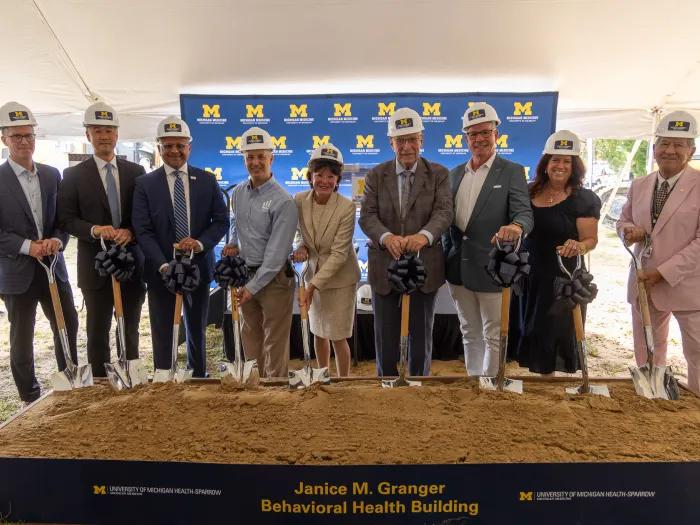
UM Health-Sparrow breaks ground on Janice M. Granger Behavioral Health Building
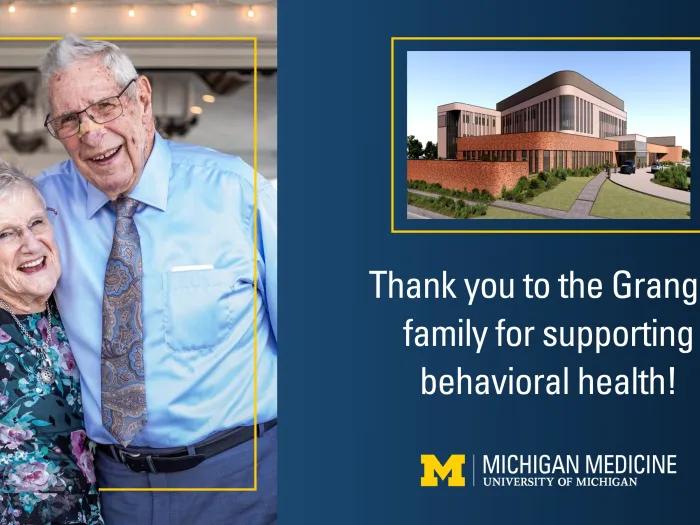
Granger family continues support of local health care with major donation for new behavioral health hospital

AI chatbots spark mental health concerns, including psychosis risk

Bringing awareness to cerebral palsy through Dallas Cowboys Cheerleader boots