Alzheimer’s: Not Just a Disease for Older Adults
Alzheimer’s disease is thought of as a condition affecting seniors. But early-onset Alzheimer’s is a devastating diagnosis for people in their primary earning and family-building years.
1:00 PM
Author |

Most of us know Alzheimer's disease, the most common type of dementia and sixth-leading cause of death in the U.S., as a condition that affects older adults.
SEE ALSO: Coping Strategies for Lewy Body Dementia Caregivers: A First-Person Story
But as the country mourns Pat Summitt, the winningest college basketball coach in history, early-onset Alzheimer's, the form of the disease Summitt had for the last five years of her life, has entered the spotlight.
Symptoms of early-onset Alzheimer's, defined as any stage of the disease that strikes a person before age 65, affect people in their 30s, 40s or 50s, constituting up to 5 percent of those with the disease. This means those newly diagnosed are in their primary earning years, in the midst of building families and enjoying the hard-earned wisdom of midlife experience and creative expression.
These are sobering thoughts. It is widely accepted that old age and memory loss go hand in hand. But memory loss among younger adults is quickly attributed to stress, depression or lack of sleep, meaning it often takes longer to get a correct diagnosis.
Caring for someone with early-onset dementia
Dementia has long been associated with adults past retirement age, after children are raised and careers forged and celebrated. But as early-onset cases show us, this idea is not always reality.
With this in mind, many shudder at the thought of dementia and wince at the idea of a person in his or her prime diagnosed with Alzheimer's or a related dementia.
But, thankfully, we know more now and aim to shift the paradigm from one of fear to understanding through compassion and advocacy.
The National Alzheimer's Association launched the program ACT on Alzheimer's to designate dementia-friendly communities so everyone can better support individuals with the disease and their families.
In recent years, as more public figures have been diagnosed with Alzheimer's disease, Parkinson's disease and Lewy body dementia, these individuals have generously increased awareness, contributed to the creative landscape of media outreach and helped to improve research funding. Still, we must continue to ask how these efforts translate to our communities, and the way we are equipped as individuals and families to respond meaningfully and advocate for those who are living with the symptoms now.
Finding support for caregivers and patients
With the devastating news of dementia comes the staggering realization that all networks of support and normal access to community, like work, social and family life, are challenged and may diminish or disappear altogether. While we continue to work toward a cure, we must create ways to help individuals and families in the midst of diagnosis to keep their connections and to remain included in community and civic settings.
SEE ALSO: How Therapy Animals Help Those Living with Dementia
If you or someone in your family has the condition, remember: You are not alone. It is believed that at least 200,000 people in America under the age of 65 have early-onset Alzheimer's disease. There are resources to help you. There are resources and networks created to prevent isolation and improve your access to care and a community of peers.
As with any dementia diagnosis, it's beneficial to join a community for support, discussion and education, such as our Elderberry Club at the University of Michigan, just for women with early-onset memory loss. The members of Elderberry Club seek a creative and connected life. They have published poetry, created a traveling art gallery, volunteer together and make friends in a safe space. You can find information about local support groups and programs in your area through the Alzheimer's Association.
If we are to truly help families living with early-onset Alzheimer's, we need to simultaneously change the policies and develop a comprehensive national action plan. One resource we recommend is the Dementia-Friendly Communities toolkit from ACT on Alzheimer's.
This is the predominant public health dilemma of our day, with Alzheimer's and other dementias taking more lives than breast cancer and prostate cancer combined.
Getting involved, whether or not you are directly affected by Alzheimer's disease today, is vital to improving the lives of those with the disease in the future.

Health Lab
Explore thousands of health news & research stories by visiting the Health Lab homepage for more.
Media Contact

Public Relations
Department of Communication at Michigan Medicine
Stay Informed
Want top health & research news weekly? Sign up for Health Lab’s newsletters today!
Featured News & Stories
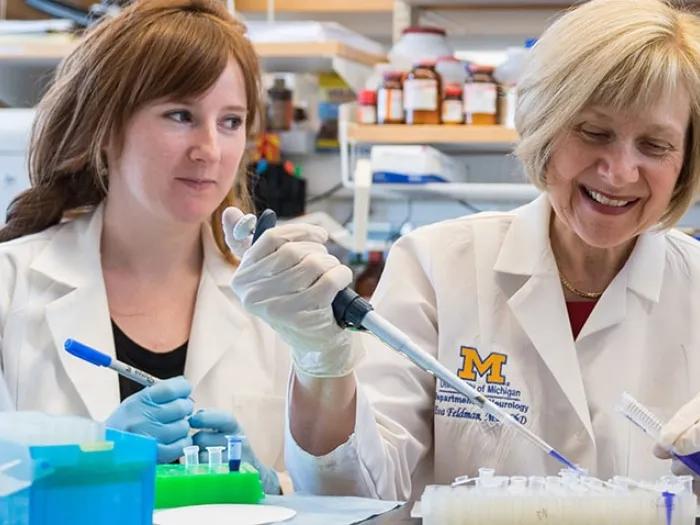
Family Connection Motivates Alzheimer’s Research

7 Lessons I Learned as a Lewy Body Dementia Support Group Facilitator
Antipsychotic Use in Nursing Homes: Balancing Medication Safety, Policy, and Dementia Care
Can Your Voice Reveal Early Signs of Alzheimer’s?

A pediatric epilepsy fundraiser that changes lives