Neighborhoods play role in older adults’ pandemic experience
Your neighborhood is more impactful than you think when it comes to your social emotional health.
5:00 AM
Author |
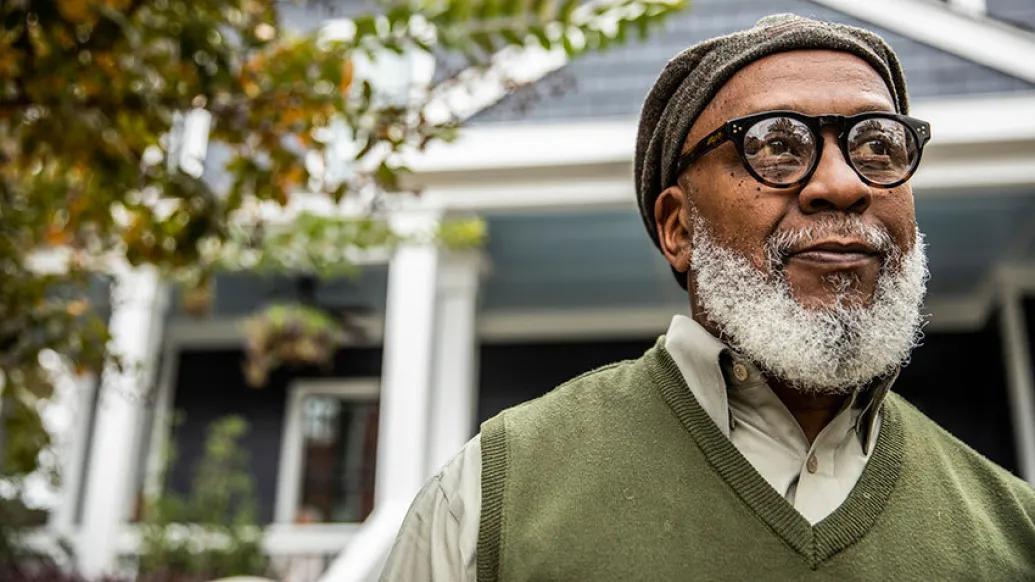
How have older adults adjusted to living under the pandemic? There's no one-size-fits-all experience, according to University of Michigan researchers.
In spring and summer 2020, Michigan Medicine researchers Jessica Finlay and Lindsay Kobayashi launched a study to examine how the COVID-19 pandemic has fundamentally changed neighborhood environments and the way older adults age in place.
They found that some older adults reported less social interaction and diminished relationships with their neighbors, while others reported more. Some older adults experienced less social support from their neighbors, while others felt they experienced more support from their neighbors.
Some people's neighborhoods became totally quiet during the pandemic, while other neighborhoods bloomed with outside happy hours, children playing in front yards and residents walking and biking in the neighborhood — so much so that some study participants complained about the noise.
"There's not one model of experience for older adults in this pandemic," said Finlay, the study's lead author and a postdoctoral researcher at the Institute for Social Research. "There's a whole diversity of reactions and experiences and perceptions going on across the country that I think reflects some of the broader disparities, polarization and inequities that exist across the entire fabric of the United States."
Their results are published in The Gerontologist.
To examine how older adults are living under the pandemic, Finlay and her fellow researchers recruited 6,886 participants to complete an online survey in April and May, 2020. The participants, who were from across the country, including Alaska, Hawaii and Puerto Rico, then completed monthly follow-up surveys.
These surveys assessed the participants' physical and mental health, level of socialization and health behaviors, such as exercise and drinking, as well as COVID-19 testing and symptoms. The survey also included open-ended questions to gather responses about participants' ongoing experiences, perspectives and significant life events.
From this group of respondents, the researchers drew a random sample of 1,000 open-ended responses. They used quotas for age, gender, race, ethnicity and education, aiming to match the United States population of those over the age of 55. Most of the participants lived in neighborhoods, and about 20 percent of the respondents said they did not.
More than 25 percent of the study participants reported reduced quality and quantity of interactions with their neighbors — especially impromptu run-ins on front steps, porches or yards — and a stop to gatherings such as indoor happy hours, book clubs and athletic activities.
They thought that COVID exacerbated isolation, particularly among those without access to outdoor gathering spaces. Ideological and cultural differences prompted feelings of isolation, and those who lived in neighborhoods with high rates of COVID-19 cases or public health misinformation more often shared feeling isolated. But 12 percent of participants reported more neighborly interactions and socializations.
"I now know the names of my neighbors and we talk across the street from each other," one participant said. "On my morning walk, I normally see 15 to 25 other walkers and we keep our distance, wave and say 'Hi.'"
Some participants reported less psychosocial support.
"One of my neighbors is in 'comfort care' hospice and I feel extremely bad that I can't go sit with her, bring them meals, etc., due to COVID concerns," another participant said.
Other participants who moved during the pandemic reported feeling isolated because they weren't able to get to know their new neighbors. Some participants reported witnessing how COVID and varying adherence to public health measures — for example, mask-wearing and social distancing — seemed to underscore the country's political divisions.
Some of the study participants worried that local restaurants and shops where they previously gathered for a cup of coffee and social interaction — locations Finlay calls "third places" outside of home and work — were going out of business.
"We know neighborhoods are starkly different," Finlay said. "Not everyone has access to places to engage with each other and enjoy each other's company. Having parks or big front porches are often skewed more toward affluent areas, which are predominantly where older white adults live. In comparison, communities of color often have less access to these private spaces to safely engage during COVID."
The researchers noticed those who experienced decreased engagement, socialization and support levels were more commonly participants of color.
"We also know that COVID numbers are not equal among our communities, too," Finlay said. "So our hardest hit communities are often lower income and underserved. It just speaks to needing deep policy changes and structural investment in certain communities."
This kind of attention to neighborhood infrastructure is critical to help older adults age well in place, the researchers say. Specifically, the COVID-19 pandemic may have underscored how important neighborhoods are to the health and well-being of older adults. According to Finlay, accessible neighborhoods critically influence the ability of older adults to feel safe and supported, and to be physically and socially active.
"It is important to identify and address the pandemic's long-term implications for aging in place, such as how older adults can safely inhabit public neighborhood spaces, adjust to being in crowded areas without feeling anxious, and return to the 'new normal' of daily life," she said.
This article was originally published by The University Record.
This article was additionally edited by Allison Mi.

Health Lab
Explore thousands of health news & research stories by visiting the Health Lab homepage for more.
Media Contact

Public Relations
Department of Communication at Michigan Medicine
Stay Informed
Want top health & research news weekly? Sign up for Health Lab’s newsletters today!
Featured News & Stories

Are you at risk of a genetic disease? Guidelines for testing should be updated, experts say
Updated prostate cancer screening guidelines emphasize benefits of early detection
Small Pauses, Bigger Impact: Mindfulness in Action

Major Changes to Medicaid
Sports gambling on the rise among college students