Donuts on Our Daughters
A U-M study examines whether images of food on kids’ clothes influence eating behavior.
7:00 AM
Author |
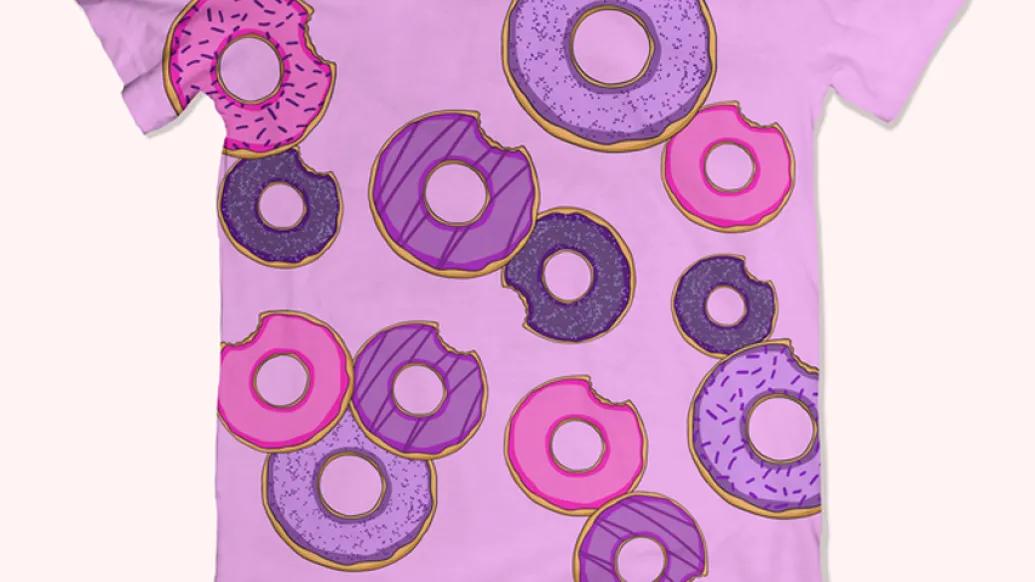
Frosted cupcakes, sprinkled donuts and chocolate chip cookies — all on the list of foods that pediatrician Megan Pesch suddenly found difficult to avoid.
Not at the bakery or grocery store, but on children's clothing.
LISTEN UP: Add the new Michigan Medicine News Break to your Alexa-enabled device, or subscribe to our daily audio updates on iTunes, Google Play and Stitcher.
The mother of three daughters couldn't help but notice that food graphics had become fashionable — from sleep sacks and pajamas adorned with pink and purple donut patterns to T-shirts decorated with ice cream cones and cutesy sayings about being "sweet."
Pesch, M.D., a developmental behavioral pediatrician who studies childhood eating behaviors at University of Michigan C.S. Mott Children's Hospital, wondered how prominent the trend was and whether it had implications for children's eating habits.
"I started thinking about how food graphics on clothing may impact kids' identification with food starting as early as when they're babies," Pesch says. "Could food on apparel be another influence on food preference and eating behaviors?"
"Turning our kids into walking billboards of junk food reinforces the appeal of these foods," she says. "Whether intentional or not, we are sending positive societal messages about consuming unhealthy food to children and their parents that may influence unhealthy eating behaviors long term."
Unhealthy foods
In a new analysis published in the journal Eating Behaviors, Pesch and colleagues looked at 3,870 clothing items over a monthlong period in 2018 from four major children's retailers. One in 11 apparel items included food graphics and two-thirds of those foods were unhealthy, while others had healthier options, such as fruit. A third of the items featured food graphics "having fun," such as a pizza slice riding a skateboard.
Gender differences were blatant. While girls' clothing mostly brandished pastries and desserts, boys' clothes were more likely to include fast food and salty categories like pizza, hot dogs and fries.
"That may underlie some of these cultural expectations of girls' characteristics versus boys' behavior, specifically that girls are expected to be 'sweet,'" Pesch says.
MORE FROM MICHIGAN: Sign up for our weekly newsletter
Other studies have suggested that children's food preferences and eating behaviors are associated with social influences. Children are more likely to taste or eat a food paired with an image of a character, for example. Indeed, mascots and cartoon characters have often been used in food marketing to increase a brand's appeal to children.
There has been less attention to non-brand-specific graphic items such as clothing with food icons, Pesch says.
Food as characters
But many food graphics included in the analysis were portrayed as characters. Examples include a dinosaur with a thought bubble thinking about a hamburger, a sequined ice cream cone carrying a purse, and soda and fries high-fiving with the word "besties." Or the shirts that featured unicorns, rainbows and a cupcake with the phrase "Dream Big" and a chocolate chip cookie dancing with a glass of milk.
Sayings such as "More Donuts, More Pizza, More Vacays," "Donut Worry Be Happy" and "Always S'More Fun with You" are other examples.
Clothing is believed to be a powerful medium that may influence children's self-identity, and graphics portraying unhealthy food as "fun, silly and positive" don't seem to be going away, Pesch notes. Donuts, pizza and other junk food items are also showing up more on other kids' items, such as inflatables, toys and gift wrap.
Persist into adulthood
Research suggests that food preferences and eating behaviors established in childhood often persist into adulthood, authors say. It is unknown what messages children may internalize when wearing food-graphic clothing, and if this influences children's food preferences, but it should be explored in future research, they say.
SEE ALSO: Got a Picky Eater? Try These 11 Tips at the Table
"There is nothing wrong with a donut or cookie once in a while. They are 'sometimes foods' and completely fine in moderation," Pesch says. "But children's association and relationship with food begins developing at a young age. Obesity is much more easily prevented than it is treated."
"We spend a lot of time studying how children develop eating habits and food preferences and what we can possibly do early on to prevent obesity," she says. "Food graphics on children's products may provide insights into how society shapes children's emotional relationships with food and reinforces obesity-promoting messaging."
This work was supported by the American Heart Association (17FTF33630183) and the National Institutes of Health (5T32HD079350-02).

Health Lab
Explore thousands of health news & research stories by visiting the Health Lab homepage for more.
Media Contact

Public Relations
Department of Communication at Michigan Medicine
Stay Informed
Want top health & research news weekly? Sign up for Health Lab’s newsletters today!
Featured News & Stories

Galens Tag Days celebrates 100 years of helping kids
From 20 seizures a day to more time for play: How personalized epilepsy care helped young patient
Type 1 diabetes does not mean sitting out for 10 year old

More babies with hypoplastic left heart syndrome surviving critical period between surgeries

Distance, insurance, social factors may hinder access to lifesaving heart monitoring for children