Common anti-seizure medication associated with elevated fracture risk in kids with epilepsy
The findings will help physicians determine treatment options for children and young teens.
5:00 AM
Author |
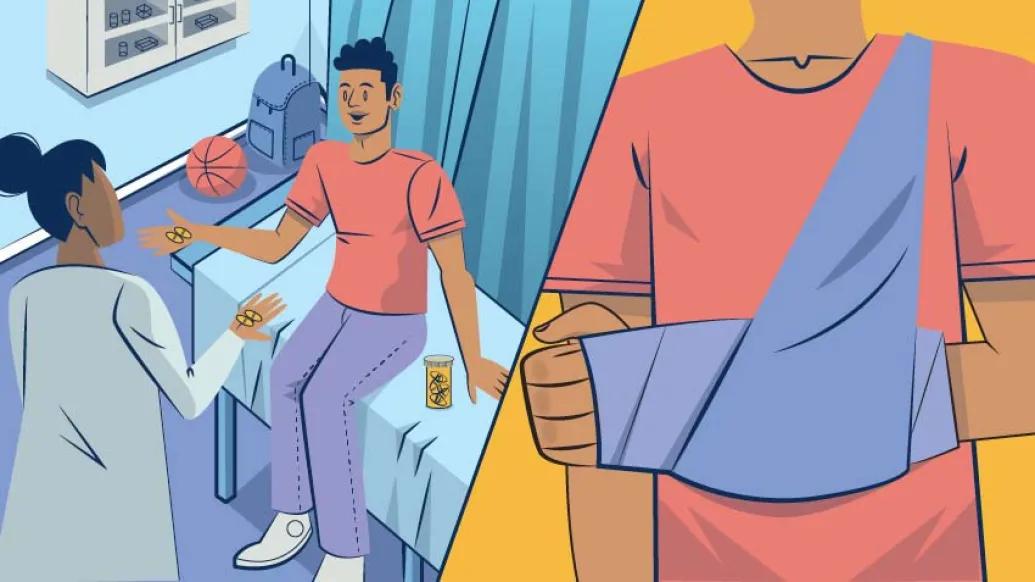
One of the two most prescribed anti-seizure medications may increase the risk of fractures for children with epilepsy, a Michigan Medicine study found.
The paper, published in Epilepsia, examined the effects of levetiracetam and oxcarbazepine, two common anti-seizure medications, on bone fragility of children between the ages of four and 13. Researchers found that levetiracetam was not related to fractures, but oxcarbazepine was associated with a higher risk of fracture for children with epilepsy.
"Prior to this study, little research had been conducted on how these two commonly prescribed medications impact bone fragility," said Daniel Whitney, Ph.D., lead author of the paper and assistant professor of physical medicine and rehabilitation at Michigan Medicine. "These findings provide a vital insight into how two commonly prescribed medications impact children and adolescents during a critical period of bone development."
During the pre-to-mid-puberty stage, several features – like genetics, bone structure and bone biology – coalesce to develop the bone strength that peaks in adulthood. Disruptions during those critical years can compound to have lasting impacts on the musculoskeletal system.
The research team observed fracture incidence rates over a five-year period between 561 children and teenagers with epilepsy, and around 271,000 without epilepsy who did not take anti-seizure medications. In that time, 12.8% of children on oxcarbazepine sustained a fracture, compared to 7.5% taking levetiracetam and 8.2% without epilepsy.
SEE ALSO: Preparing Adolescents With Epilepsy to Manage Care through Adulthood
These two drugs are commonly prescribed because they have relatively safer side effect profiles compared to some of the other anti-seizure medications offered, said Erin Fedak Romanowski, D.O., a corresponding author of the paper and clinical assistant professor of pediatric neurology at Michigan Medicine.
"Knowing that oxcarbazepine is associated with a higher fracture risk will allow clinicians to be more thoughtful about to which children they prescribe the medication," Fedak Romanowski said. "Some children are going to be at higher risk for fracture than others at baseline; this is another factor to consider when evaluating the complexities of what drugs to use for whom and when."
Whitney noted the findings do not mean that oxcarbazepine is unsafe to prescribe, nor that all children with epilepsy should be on levetiracetam.
There is no perfect anti-seizure medication, and all have potential adverse effects. But physicians can take all of this available information to take a personalized approach that optimizes individual patient health outcomes.Erin Marie Fedak Romanowski, D.O.
Many children and adolescents with the epilepsy have associated neurodevelopmental disorders, like cerebral palsy. That pediatric patient population is known to have a high risk of fracture, but side effects of levetiracetam may affect a child's mental health, which is also a common comorbidity for kids with neurodevelopmental disorders.
This concept is known as iatrogenesis, or medical issues that occur because of medical care. The anti-seizure medications accomplish their self-titled purpose, but some can spur secondary complications like bone fragility and mood or behavior problems.
"Our goal for patients is 'no seizures, no side effects,'" Fedak Romanowski said. "However, there is no perfect anti-seizure medication, and all have potential adverse effects," she said. "But physicians can take all of this available information to take a personalized approach that optimizes individual patient health outcomes."
SEE ALSO: Study shows when people with cerebral palsy are most likely to break bones
Whitney said his next step is a follow-up study to find out why oxcarbazepine is linked to the increase in fragility fractures during this unique window of time. Then, the team concluded, they can assess whether the children could benefit from supplementary bone fragility therapies.
"As bone development has distinct periods that establish certain structural aspects, we are interested in studying if some medications alter the needed biology to form the bone's structure," Whitney said. "If so, perhaps we can develop adjunct treatment to counteract these effects, so children can benefit by seizure reduction without weaker bones."
Paper cited: "Effect of levetiracetam and oxcarbazepine on 4-year fragility fracture risk among prepubertal and pubertal children with epilepsy," Epilepsia. DOI: 10.1111/epi.16998

Health Lab
Explore thousands of health news & research stories by visiting the Health Lab homepage for more.
Media Contact

Public Relations
Department of Communication at Michigan Medicine
Stay Informed
Want top health & research news weekly? Sign up for Health Lab’s newsletters today!
Featured News & Stories
A pediatric epilepsy fundraiser that changes lives

Michigan Alzheimer's Disease Research Center receives $22M to advance efforts statewide
Engineered nanoparticles sensitize gliomas to radiotherapy

5 things to know about ALS
First person-centered measure of dementia caregiving styles improves partner, patient outcomes