A ‘Dynamic’ Technique to Categorize Seizures
An international group of experts suggests an approach to study seizures that could help propel understanding of epilepsy forward.
8:00 AM
Author |
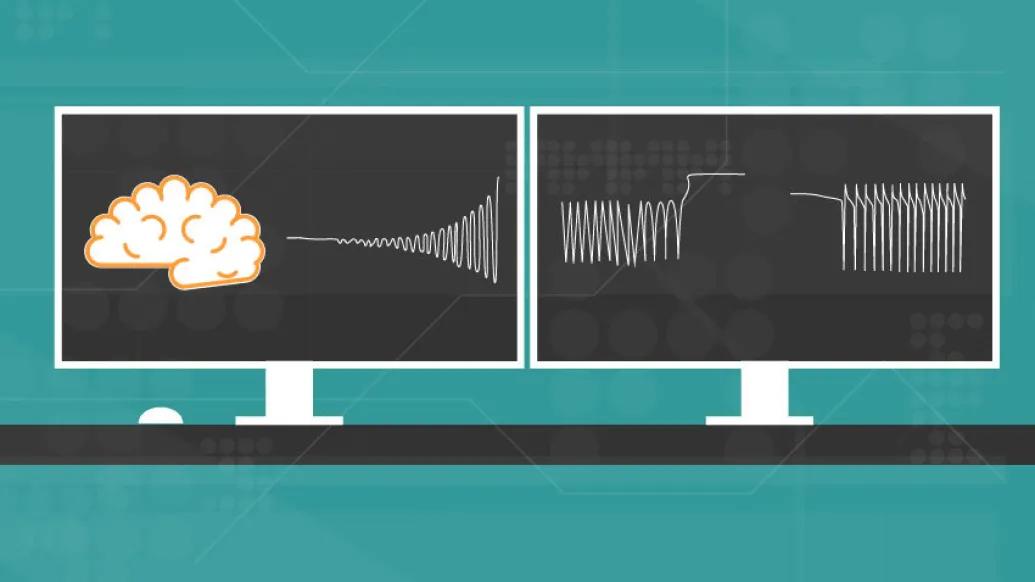
A new method of analyzing seizures could help neurologists better understand what happens when the brain generates out-of-control electrical activity, researchers say.
While clinicians today will typically document the seizure's location with EEG electrodes, start and stop times and reported symptoms, these data don't always lead them to an effective treatment.
Now, an international collaboration led by Michigan Medicine and Aix-Marseille University in France proposes a new shared language to make seizure descriptions more useful in clinical practice, and easier to study in clinical research. The collaboration also included researchers from the University of Melbourne and Monash University, both in Australia, the University of Freiburg in Germany and Kyoto University in Japan.
"The Taxonomy of Seizure Dynamics we're proposing is a way to classify seizures that hasn't been used before," says co-senior author William Stacey, M.D., Ph.D., associate professor of neurology at Michigan Medicine. "A clinician can just look at the data from the seizure, ask three questions and determine the seizure type, which we call the dynamotype."
The framework, published in eLife, is based on a mathematical approach that's popular in engineering, physics and other fields. It identifies 16 seizure types based on EEG dynamics. The authors say each category has distinct characteristics, and one patient could experience different categories of seizures over time.
This is what we need in epilepsy but have never had.William Stacey, M.D., Ph.D.
This work follows the team's previously-published computational model of looking at seizures by putting the framework into action using human data. Researchers categorized EEG data from 120 patients across seven epilepsy centers worldwide using their taxonomy.
"The agreement between the researchers was extremely high, and is quite simple to do for a trained EEG specialist," Stacey says.
From symptoms to dynamics
The authors identified four ways a seizure can start, and four ways a seizure can end, leading to these 16 possible combinations, or dynamotypes. And that categorization allows the clinician to focus on the most useful information about the seizure, Stacey says.
The authors envision clinicians who currently rely on physical symptoms and genetic causes to determine potential treatment would now put a stronger focus on how the seizure stops and starts as seen on EEG evaluations.
SEE ALSO: How Lasers Are Changing the Future of Epilepsy Treatment
"We believe the characteristics clinicians were keying in on using phenotypes and genotypes are only part of the picture," Stacey says. "If you want to understand what the brain is physically doing during a seizure, classifying the seizure into a dynamotype provides a clearer starting point for discussion and research."
EEGs have been a valuable part of seizure analysis for years, helping clinicians determine where in the brain and when seizures start, but the authors say they hold power beyond symptom description that can be harnessed using the Taxonomy of Seizure Dynamics.
"Dynamics research has been very successful in predicting and controlling systems like power grids and reservoir levels," Stacey adds. To understand why it's important to classify seizures, think about holding a photo of a car, he says.
"A photograph can indicate when and where a car is present in the road, but a different type of analysis would be required to know the speed of the car. A taxonomy of cars would know the difference between an economy sedan, a sports car and a truck," he explains. "Classifying these different kinds of vehicles gives you insight into their dynamics. This is what we need in epilepsy, but have never had."
And any way to untangle the randomness and mystery of seizures through mathematical prediction is desperately needed, Stacey says, because patients with epilepsy often live in constant fear of their next seizure, not knowing when it will strike.
SEE ALSO: Heart Abnormalities May Trigger Sudden Unexplained Death in Epilepsy
He envisions that understanding seizure dynamics will one day allow clinicians to predict how seizures will respond under different conditions, or lead to the development of a tool to determine whether a seizure is on the way.
Paper cited: "A Taxonomy of Seizure Dynamotypes," eLife. DOI: 10.7554/eLife.55632

Health Lab
Explore thousands of health news & research stories by visiting the Health Lab homepage for more.
Media Contact

Public Relations
Department of Communication at Michigan Medicine
Stay Informed
Want top health & research news weekly? Sign up for Health Lab’s newsletters today!
Featured News & Stories

Intermittent fasting can reverse diabetes in mice, study finds

Michigan man undergoes complex heart repair after last minute surgery cancelation

Are you at risk of a genetic disease? Guidelines for testing should be updated, experts say

New questionnaire aims to improve understanding of demand avoidance in children, teens

From 20 seizures a day to more time for play: How personalized epilepsy care helped young patient