
Kara Gavin
Research and Policy Media Relations Manager
Gavin draws on more than 25 years of experience in communicating about science, medicine and health policy. She focuses mainly on the health services research done by members of the U-M Institute for Healthcare Policy and Innovation, who work to understand and improve the safety, quality, equity and affordability of health care. As part of the Michigan Medicine communication team, she has lead responsibility for primary care and mental health topics. Contact: [email protected]; Twitter: @Karag


Health Lab
Health Insurance Rule Change Could Help Millions of Chronic Disease Sufferers Spend Less for the Care They Need Most
New federal health insurance rule could save on out-of-pocket costs for patients managing chronic conditions.

Health Lab
Taking Opioids for Chronic Pain May Make It Harder to Find Primary Care
“Secret shopper” study reveals 40 percent of primary care clinics will not accept a new patient who takes opioids on an ongoing basis, reducing their access to needed care

Health Lab
Pneumonia Patients Get Too Many Antibiotics – Especially as They Leave the Hospital
Pneumonia Patients Get Too Many Antibiotics – Especially as They Leave the Hospital

Health Lab
Effort to Stop Revolving Door for Hospital Patients May Be Spinning Its Wheels
Hospital readmissions for hip and knee replacement patients aren’t dropping any faster since penalties went into effect, suggesting the program may have hit its “floor” and casting doubt on expansion.

Health Lab
Many Grandparents’ Medicines Aren’t Secure Enough Around Grandchildren
Many grandparents’ medicines aren’t secure enough around grandchildren, according to the National Poll on Healthy Aging.

Health Lab
Efforts to Improve Health Care Value Should Focus on Doing the Right Thing
As health care providers push to reduce low-value care, they should put more emphasis on assessing unintended consequences, listening to patients and providers, and measuring outcomes, a U-M-led review finds.
Health Lab
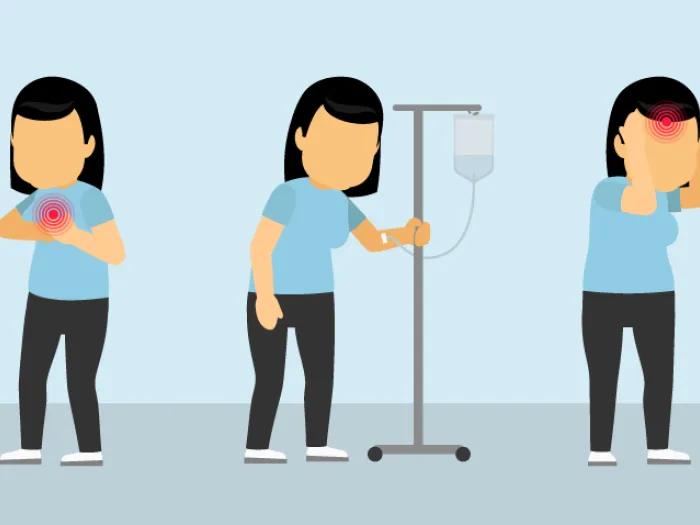
Living with One Disease Is Hard Enough; Living with Many Can Be Far Worse
A new tool “scores” patients based on the impact of their multiple chronic conditions. The tool reveals that those with higher scores have faster memory loss, a higher suicide risk and a higher overall risk of death.

Health Lab
Lower Risk of Type 1 Diabetes in Children Vaccinated Against ‘Stomach Flu’ Virus
A U-M study found that type 1 diabetes rates were one-third lower in children who received all doses of the rotavirus vaccine.

Health Lab
To Protect Kids and Teens from Firearm Harm, Answer These Research Questions First
As interest grows in addressing pediatric firearm injuries — the second-leading cause of death for young people, researchers list the most urgent priorities for study.
News Release
More than half of patients in pain management study took no opioids after operations
The opioid epidemic has become a public health crisis in the U.S. While primary care physicians have been writing fewer opioid prescriptions over the last several years, new opioid prescriptions by surgeons increased 18 percent from 2010-2016.

Health Lab
As Opioids Kill More Veterans, Study Shows Treatment Needs
Most of those overdosing haven’t received prescription opioids recently, suggesting a need for more opioid use disorder screening and treatment.

Health Lab
Discovery in Mice Could Remove Roadblock to More Insulin Production
New research shows that a combination of two immune-system factors could open up new avenues for treating diabetes and obesity.
News Release
Champion of surgical quality named chair of U-M Department of Surgery
The University of Michigan Board of Regents today approved Justin B. Dimick, M.D., M.P.H. as the next chair of the Department of Surgery at the U-M Medical School.

Health Lab
Despite Worry, Older Americans Don’t Ask Doctors About Dementia
Many people in their 50s and early 60s buy supplements or do puzzles in hopes of staving off memory loss and dementia. But without mentioning their concern to health providers, they may miss out on proven strategies that protect brain health.

Health Lab
New Doctors’ DNA Ages 6 Times Faster Than Normal in First Year
A new study finds that the long work hours of an intern’s first year of medical residency are associated with accelerated cellular aging. It’s the first longitudinal study of people exposed to such prolonged stress.
