
Health Lab Articles

Health Lab
Mental health apps may help those waiting for care, study finds
People with depression, anxiety and even suicidal thoughts can wait weeks for a mental health appointment, but a new study shows mobile apps and activity trackers might help during the wait.

Health Lab
New drug candidate blocks resistance to cancer therapies
A team of researchers at the University of Michigan Health Rogel Cancer Center has designed a molecule that impairs signaling mediated by two key drivers of cancer therapy resistance.

Health Lab
Diabetes and weight loss drugs could be enhanced, shows study in mice
A network of proteins found in the central nervous system could be harnessed to increase the effectiveness, and reduce the side effects, of diabetes and weight-loss drugs such as Ozempic and Mounjaro, according to research from the University of Michigan Life Sciences Institute.

Health Lab
Many breast cancer survivors don't receive genetic testing, despite being eligible
As cancer treatment and survivorship care relies more on understanding the genetic make up of an individual’s tumor, a study from the University of Michigan Health Rogel Cancer Center finds that many breast cancer survivors who meet criteria for genetic counseling and testing are not receiving it.

Health Lab
Considering the patient’s perspective in inducible laryngeal obstruction care
Exploring the main topic of concern patients have when it comes to the results of their treatment for inducible laryngeal obstruction can help to increase effective treatment methods.

Health Lab
This anesthesia technique makes surgery safer, less scary for pediatric patients
The pediatric spinal anesthesia program offers a needle-based technique that provides sensory and motor block without the need for intubation or general anesthesia for pediatric surgical procedures below the belly button. This means the patient will not feel anything below chest level.

Health Lab
The data says we need to talk about physician mental health early
A medical student and surgery faculty member studied the longevity of depression symptoms developed by first-year resident trainees. With their findings now published, they hope to use this data to destigmatize conversations about physician mental health and pave the way for better cultural and institutional support.

Health Lab
How a gene for obesity affects the brain
How a gene for obesity affects the brain: The discovery could lead to new treatments for metabolic diseases with fewer side effects

Health Lab
Complex procedure saves man on life support, reverses organ failure
A specialized procedure saved one man who was on life support in the hospital.

Health Lab
All FODMAPs aren’t created equal: working toward alternative diets to manage IBS
Two studies from Michigan Medicine may provide hope for patients with irritable bowel syndrome (IBS) struggling to implement the traditional low-FODMAP diet.

Health Lab
An unequal toll of financial stress
Inflation rates may have cooled off recently, but a poll shows many older adults are experiencing financial stress – especially those who say they’re in fair or poor physical health or mental health

Health Lab
Maternal suicide study provides insights into complicating factors for perinatal deaths
Suicide during pregnancy and in the months after having a baby is more likely among women who have had other mental and physical health problems, intimate partner issues or recent bereavement.

Health Lab
Sunscreen dispensers make skin cancer prevention easier
Medical students have worked to place dispensers at parks, pools and golf courses around Washtenaw County to give people easy access to sunscreen.

Health Lab
Older women more likely to receive heart surgery, die at low quality hospitals
Women over the age of 65 who require complex heart surgery are more likely than men to receive care at low quality hospitals — where they also die in greater numbers following the procedure, a Michigan Medicine study finds.
Health Lab
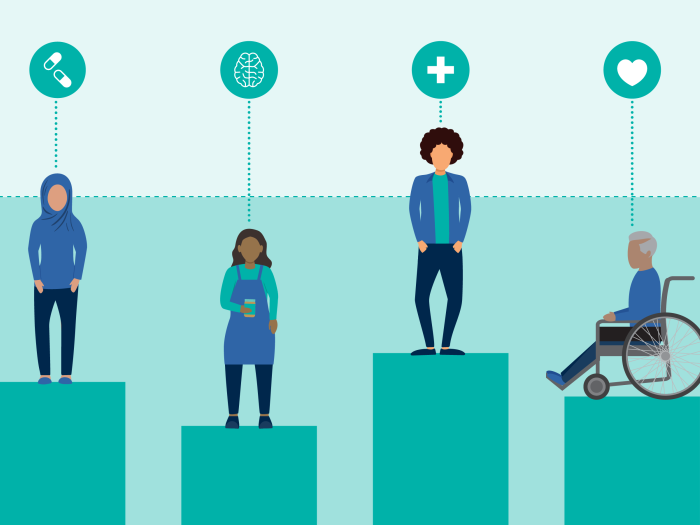
What can America do to make health care and health outcomes more equal?
Inequality in health care access and delivery, and in health outcomes, have changed somewhat in the past 20 years but more needs to be done to reduce racial and ethnic disparities.
