The Astronaut's Doctor

An alumna realizes her dream at NASA

Author | Lauren Crawford

Photos courtesy of Natacha Chough

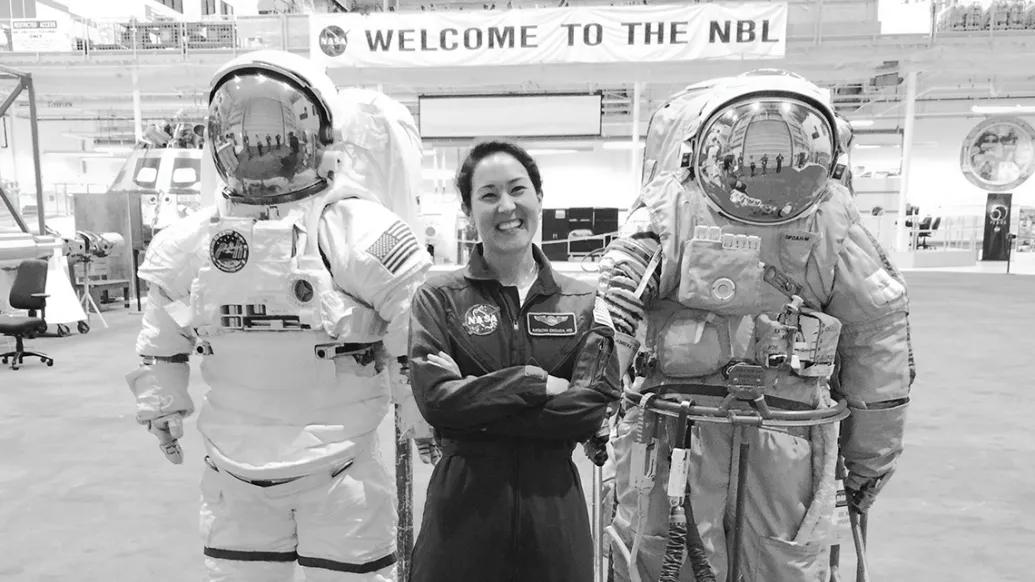
Natacha Chough (M.D. 2010) spent her childhood looking at the sky. There was something so inviting, so challenging about the immensity of space — and our place within it. She decided early on that she wanted to work at NASA. 
But, Chough says, "I knew that meant having a successful career in something else first." Her love of science — particularly biology — nudged her to pursue medicine, and there she found a second calling. 

Medicine, she discovered, was a means of navigating life on Earth. At U-M, Chough excelled in emergency medicine and helped "resurrect" the Wilderness Medicine Student Interest Group. She loved working in unpredictable environments; being forced to improvise made her approach her craft more creatively and confidently. "MacGyver medicine," she calls it. 

During an undergraduate internship at NASA in 2000, Chough learned about aerospace medicine, a specialty developed for the unique needs of air and space travel. The field combines two of her greatest loves: space and life sciences. "It was like a dream come true," she says. As simple as that, her disparate ambitions fused into one career. 

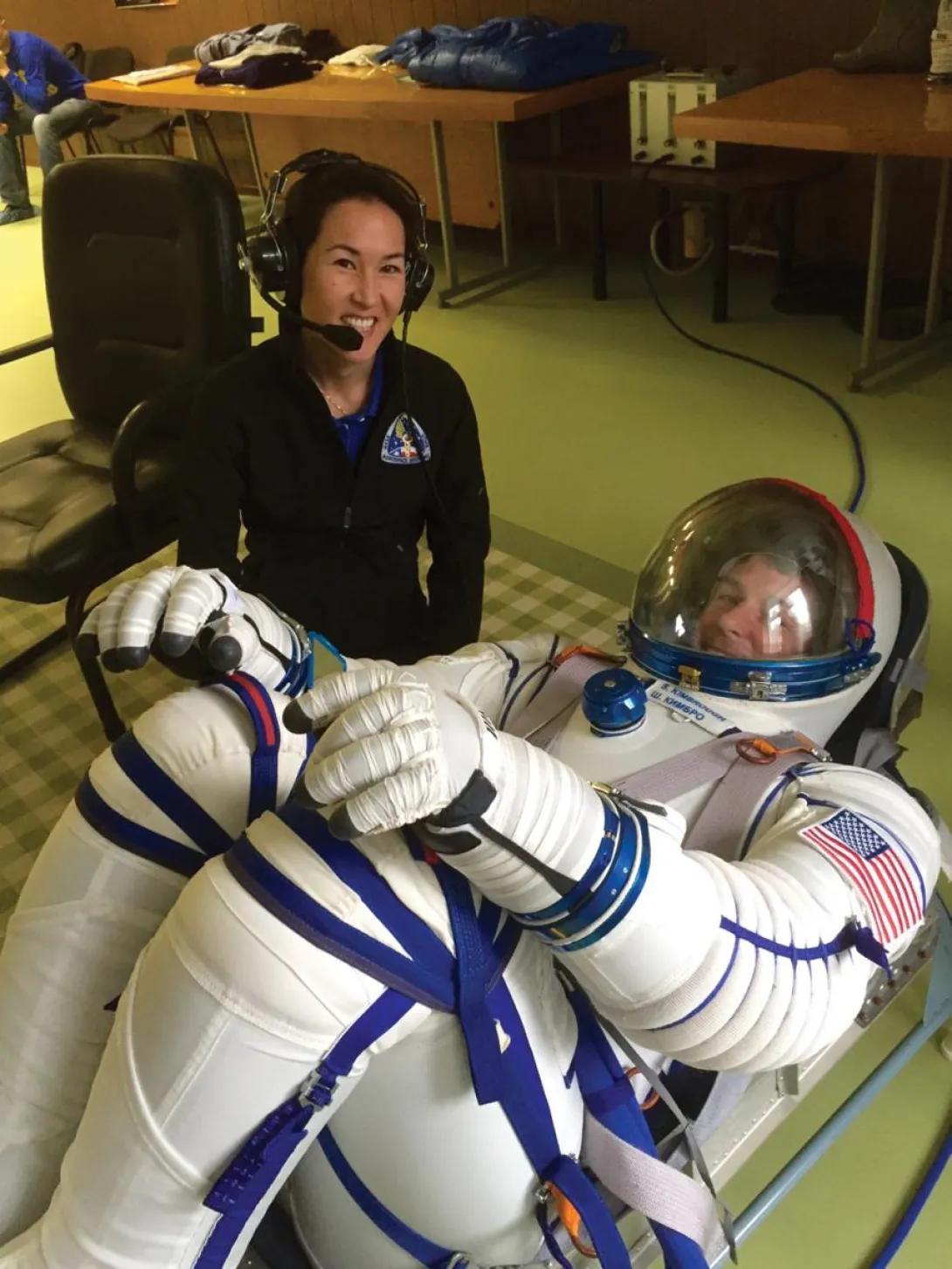
Now, as a Flight Surgeon at NASA, Chough is living that dream. Most recently, she provided ground medical support and telemedical care of Kate Rubins, Ph.D., the 60th woman to fly in space. 

"It's like taking care of Lewis and Clark," Chough says, underscoring the unusual obstacles she and her colleagues encounter. "Every time we send astronauts 'out the door' on a spacewalk, it is a challenge for everyone involved. … It is hands down the most dangerous thing we do at NASA." 

Chough wouldn't have it any other way. Despite those difficult moments, she's humbled to do exactly what she does. "We walk into Mission Control … knowing that our performance can have ultimate consequences," she says. "[And that] challenges me daily to keep my skills and knowledge polished." 

See how else she's living the NASA dream: http://youtu.be/QWc5gq1taRM 


More Articles About:

alumna NASA flight surgeon Medical School Emergency Medicine wilderness medicine

Featured News & Stories

cell phone upclose in hands
Health Lab

Emergency room intervention pairs smartphone, telehealth counseling to reduce risky firearm behavior

Among U.S. teens and young adults, firearm violence accounts for about 65,000 emergency department visits annually, and 60% of all firearm deaths in this age group are the result of interpersonal violence.
e-bikes colorful riding close up of helmet
Health Lab

E-Bikes are everywhere, but most parents say they don’t know enough about them

Electric bikes have become a familiar sight in communities across the country, but most parents say they know little about them or where they’re supposed to be used, a national poll suggests.
UMich Med Mosaic on blue background with colorful geometric shapes
UMich Med Mosaic

Beyond the White Coat: The Med Student Tradition Behind Michigan’s Smoker
In this episode of UMich Med Mosaic, host Mackenzie Kay sits down with graduating student Gareema Agarwal and MD/PhD student Mark Adame to explore the history, traditions and behind-the-scenes work that bring the University of Michigan Medical School’s annual Smoker production to life. As outgoing Smoker Czars, they share how they became involved in the beloved student-run comedy musical, the process of writing, casting and producing the show, and the challenges of balancing a major creative undertaking during their medical training.
Portrait of Thomas Macek. He's wearing a navy blazer and light blue button-down shirt.
Philanthropy News

College of Pharmacy alum advances U-M Medical School addiction research
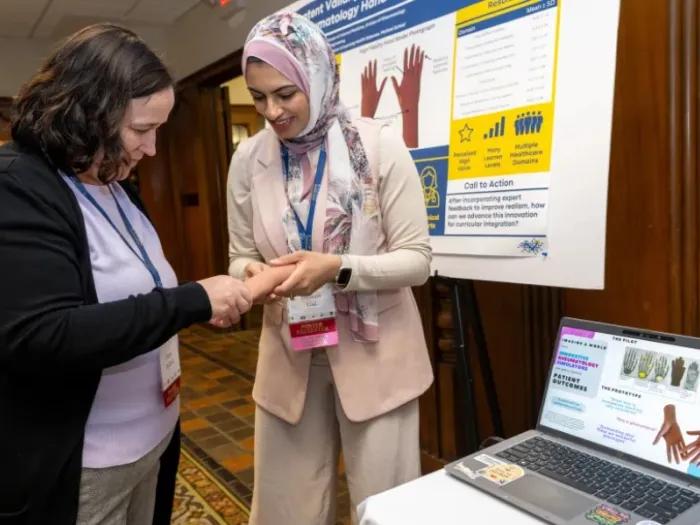
Grateful for support that help launched his career in pharmacology research and drug development, Tom Macek, Ph.D., has made a gift to the University of Michigan Medical School to advance addiction research.
women looking at model hand in front of poster and computer on table next to them
Health Lab

Rethinking how clinicians learn to feel disease
For most doctors, learning to recognize swollen joints begins in the classroom. A clinical assistant professor in Michigan Medicine's Division of Rheumatology saw a gap in how to distinguish subtle swelling in joints, thus creating a hand simulator to help.
Well-Being at Michigan Medicine with Dr. Elizabeth Harry
Well-Being at Michigan Medicine

Rethinking care: How ‘de-implementation’ can improve quality and reduce burnout

In this episode of Well-Being at Michigan Medicine with Dr. Elizabeth Harry, Dr. Eve Kerr explores the concept of de-implementation—scaling back unnecessary tests, treatments, and administrative hurdles. Kerr shares how eliminating low-value practices can reduce clinician overload, lower patient costs, and improve overall health outcomes. Discover how both healthcare organizations and local frontline teams can foster a culture of high-value care by eliminating outdated processes.