
U-M researchers receive $13 million to transform traumatic brain injury care
The award will help launch the PIONEER program to deliver better care for patients by relying on blood-based biomarkers
12:00 PM
Author |
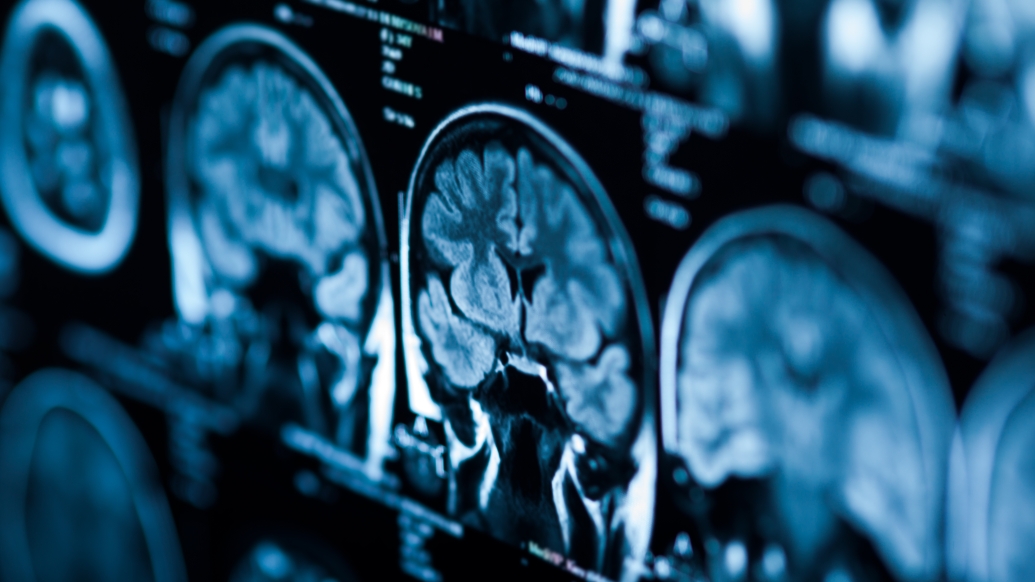
The University of Michigan has received two major grants totaling $13 million to change how traumatic brain injury, or TBI, is treated.
The funding supports two projects: one testing a potential treatment for patients with the most severe brain injuries, and another advancing blood tests capable of detecting bleeding in the brain in under 15 minutes.
Breathing new life into severe TBI treatment
The Hyperbaric Oxygen in Brain Injury Treatment (HOBIT) trial, funded with a $6.1 million renewal from the National Institute of Neurological Disorders and Stroke (NINDS), is testing whether pure oxygen delivered in a pressurized chamber can help patients with severe TBI recover.
These are the sickest patients — often comatose and on ventilators — and the trial is one of the most difficult of its kind.
“It’s a study of severe traumatic brain injury patients who are being treated with different doses of hyperbaric oxygen,” said Frederick Korley, M.D., Ph.D., professor of emergency medicine and one of the principal investigators.
The trial uses an adaptive design — if one treatment group appears more effective, more patients are assigned to it. The goal is to enroll 200 patients; 153 have already participated.
Smarter decisions in the ER
The second grant, for $6.85 million from the Department of Defense, funds the PIONEER Studies — four projects that bring blood tests for TBI into everyday emergency care.
U-M has already seen success using these tests.
“We have been using this blood test to help improve our CT scan utilization here at the University of Michigan,” Korley said. “The question is, can we do the same at six different hospitals?”
The blood test uses a handheld device, which gives results within 15 minutes, showing whether a patient has a TBI and needs a CT — often sparing people hours of waiting and exposure to radiation.
The four PIONEER studies expanding upon this test used at U-M include:
- PIONEER-Barriers and Facilitators Study, investigates why some hospitals adopt the test and others don’t.
- PIONEER-Effectiveness Study, rolls out the test at hospitals nationwide to see how it changes CT use.
- PIONEER-Efficacy Low Resource Study, tests the approach in Ghana, where resources are limited but decisions about who to evacuate for imaging can be life-or-death. This could be useful on the battlefield or anywhere that’s far from a CT Scanner. The study will include using the TBI blood test and a hand-held hematoma detection device.
- PIONEER-Prognosis Study, follows patients over time using wearables like the WHOOP device to learn how sleep, activity and other lifestyle factors influence recovery.
“By using objective data, we can avoid unnecessary CT scans for TBI patients,” Korley said. “But also, we’re hoping to learn what patients do after their injury that helps them recover faster — or makes them worse.”
Other University of Michigan scientists leading the PIONEER studies include Rockefeller Oteng, M.D., clinical associate professor of emergency medicine; Katharine Seagly, Ph.D., clinical associate professor of physical medicine and rehabilitation; Jeremy Sussman, M.D., associate professor of internal medicine; Keith Kocher, M.D., professor of emergency medicine and Rama Musalia, Ph.D., assistant professor of learning health sciences.
The team also includes Jesse M. Pines, M.D., M.B.A., MSCE, Chief of Clinical Innovation, U.S. Acute Care Solutions; Lori Uscher-Pines, Ph.D., senior policy researcher at RAND; Bory Kea, M.D., M.C.R., associate professor of emergency medicine at Oregon Health & Science University; Joseph Miller, M.D., M.S., associate professor of emergency medicine at Henry Ford Health; Kabir Yadav, MDCM, M.S., MSHS, professor of emergency medicine at the University of California Los Angeles; Bradley Dengler, M.D., neurosurgery consultant to the Surgeon General; Daniel Osei-Kwame, MBChB, FGCS, lead clinician for emergency medicine at Komfo Anokye Teaching Hospital; and Michael McCrea, Ph.D., professor of neurosurgery at the Medical College of Wisconsin.
Powered by innovation at Michigan
Both the HOBIT and PIONEER studies grew out of U-M’s research ecosystem. SIREN (Strategies to Innovate Emergency Care Clinical Trials Network), based at U-M, coordinates the hyperbaric oxygen trial across nine sites. And the Massey Traumatic Brain Injury Grand Challenge at the Max Harry Weil Institute played a pivotal role in getting the biomarker research started.
The newly formed Massey TBI regional network will coordinate the PIONEER studies.
“They provided the initial funding to get all of this work started in the first place,” Korley said of the Massey program. “And they are still helping with infrastructure support for the network.”
Since its launch, the Massey Grand Challenge has supported dozens of brain injury projects, many of which — like PIONEER — went on to secure major national funding.
Why it matters
TBI is notoriously hard to treat, but the Michigan team believes this treatment could be different.
“Almost every trial in traumatic brain injury treatment has failed so far,” Korley said. “We’re hoping this works.”
By testing bold therapies in the ICU and bringing smarter diagnostic tools to ERs, Michigan is helping build a future where brain injury care is faster, safer, and more effective —whether for service members injured in the field, patients in Ghana, or families close to home.
“Ultimately, we want to be a center of excellence,” Korley said. “And my goal is that all the things we learn in research, we’re going to put it back into how we take care of our patients.”
Media Contact
Public Relations
Department of Communication at Michigan Medicine
In This Story
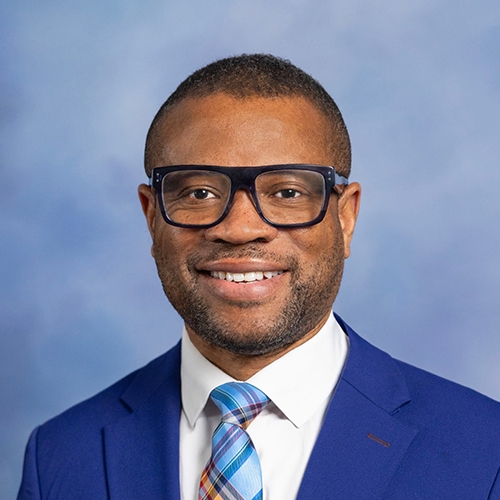
Frederick Korley, MD, PhD
Professor
Featured News & Stories

Ischemic stroke: what’s the right treatment?

For traumatic brain injury caregivers, a mobile health intervention that may improve quality of life

Revolutionizing head injury care

'Unprecedented' level of control allows person without use of limbs to operate virtual quadcopter

Training and instinct led nurse from quiet clue to critical catch

