Milestones in the history of women in medicine and biomedical science at U-M
From the first women admitted alongside men at a major medical school, to the training ground for the first female Surgeon General and the laboratories of scientific pioneers
6:00 AM
Author |
Originally published March 2020; updated and expanded March 2026
On a cold March day in 1870, a milestone in American medical history happened on the University of Michigan campus.
The U-M Board of Regents was asked to consider allowing women to study medicine alongside men – something no other major university had yet allowed. The board had just approved the education of female undergraduates in January, and the first one had arrived in February.
It took them until July to approve the idea of opening the university's Department of Medicine and Surgery, as the Medical School was known then, to women.
But that decision paved the way for women in America to earn medical degrees not in a separate medical college for women, or as rare exceptions at minor schools, but as true members of the class at a major, science-based, allopathic medical school.
Here are some key highlights from the role of women at the U-M Medical School and the rest of Michigan Medicine:
January 1870: The U-M Board of Regents passed a one-sentence resolution that paved the way for women to enroll. It read: “That the board of regents recognize the right of every resident of Michigan to the enjoyment of the privileges afforded by the University; and that no rule exists in any of the University statutes for the exclusion of any person from the University, who possesses the requisite literary and moral qualifications.” One month later, U-M’s first female student in any discipline, Madelon Stockwell, arrived on campus.
March 1870: The Regents are asked to consider the education of women as medical students, but on the condition that the female students receive some aspects of their education separate from male students, or that a separate women-only medical college be established.
July 1870: The Board of Regents formally approves the education of women as medical students, providing additional funds to compensate professors for teaching extra lectures to female students.
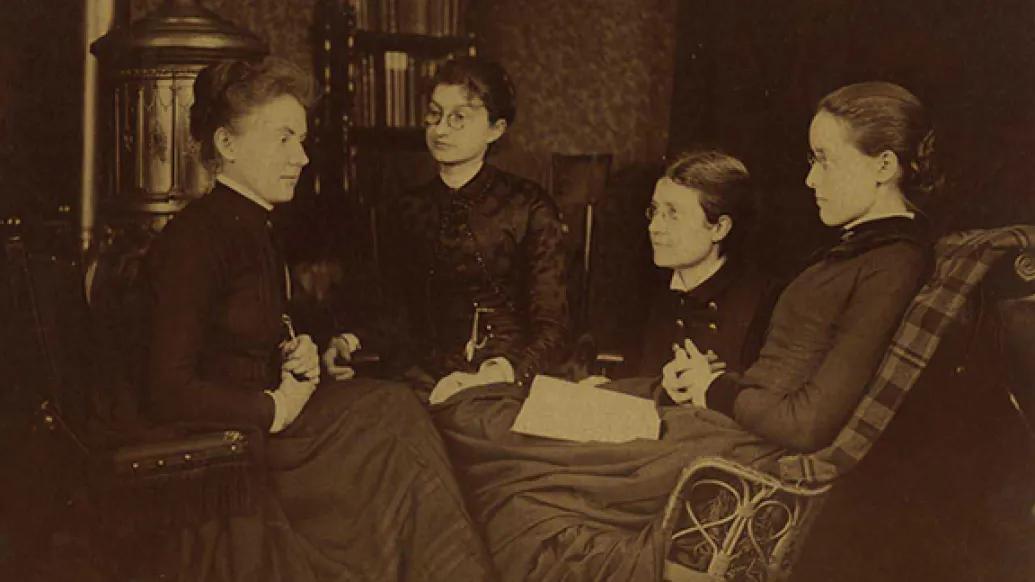
Fall 1870: The first 18 female medical students enroll, but they take all their classes except one apart from men. Five of the women had trained together at the New England Hospital for Women and Children in Boston, and arrived as a group of friends.
One of them, Emma Call, later wrote, “The first class of women...were naturally the objects of much attention critical or otherwise (especially critical) so that in many ways it was quite an ordeal. I believe that only one of the medical faculty was even moderately in favor of the admission of women, so that it speaks well for their conscientiousness when I say (with possibly one exception) we felt that we had [a] square deal from them all.”
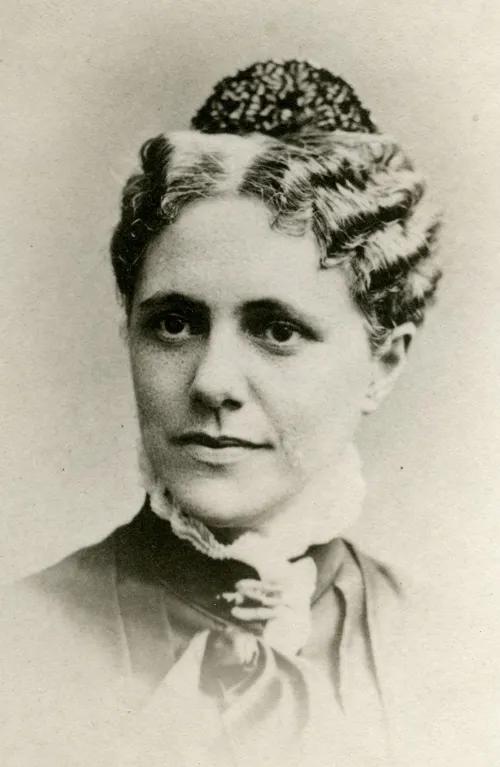
March 1871: One of the group of five friends, Amanda Sanford, becomes U-M’s first female medical graduate, having arrived with enough credits to graduate after just two terms. She receives her degree with highest honors but endures jeers and thrown paper when introduced to present her research paper at the graduation ceremony. Her senior thesis was on eclampsia during childbirth. She moved back to her native upstate New York and later married a widower, taking his last name of Hickey, but continued her medical career as well as campaigning for women's suffrage.
The first women to graduate with pharmacy degrees from U-M, Amelia and Mary Upjohn, receive their diplomas in June.
1872: Sarah Gertrude Banks, known as Gertie, a native of Walled Lake, Michigan, graduated with her medical degree, along with five other women. Their names were listed after the male graduates' names in the program and they did not appear in the class photo. Banks went on to become one of Detroit’s most prominent physicians, caring for everyone from Henry Ford’s wife Clara to the poorest women and children. She also fought for women’s suffrage.
1874: After just a few years of educating female medical students separately from men, the decision is made to combine the classes. However, women are made to sit apart from men, with a red line painted on the floor or a curtain dividing the room, and shouts erupting if they dared cross over.
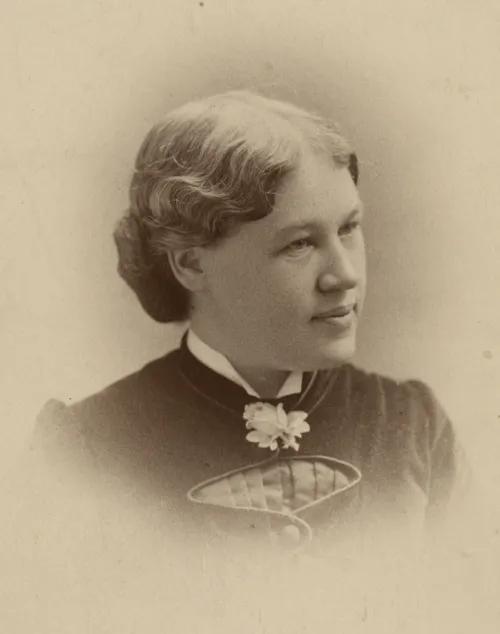
1875: Eliza M. Mosher graduates with her medical degree, having entered in 1871 and worked as anatomy demonstrator, including in front of the men’s class. After graduation, she left to practice in New York. She returned to U-M in 1896 as the university’s first female faculty member, serving as both a professor of hygiene and the first dean of women. The Mosher-Jordan residence hall is named for her and for Myra B. Jordan, who succeeded her as dean of women.
1876: The university’s first female employee to appear on the state payroll, Kate Crane, is hired as an assistant in the Chemical Laboratory, with a salary of $500 a year. An 1874 graduate of the pharmacy program, which was then part of the College of Literature, Science and the Arts, she’s listed as an accountant and dispenser of chemicals for the laboratory, where medical students and others learned to prepare medications.
1878: The first Black woman to graduate from any part of U-M is Grace Roberts, who earned a degree from the homeopathic medical school that had been founded at U-M in 1875. (The school and its hospital closed in 1922.)
1880: Martha Hughes graduates from the Medical School, having been chosen by the Church of Latter Day Saints as one of four women “set apart” for the medical profession. She practiced in Salt Lake City, and married polygamist Angus Cannon, whom she defeated in the 1896 election, making her America’s first female elected state senator.
1881: Women make up 20% of the entering medical class.
1883: Mary Hancock McLean receives her medical degree from Michigan, and goes on to become one of America’s first female surgeons, practicing in her native St. Louis until weeks before her death in 1930. Joining her in her practice for a time was Bertha Van Hoosen, an 1888 graduate of the Medical School who went on to found the American Medical Women's Association in 1915.
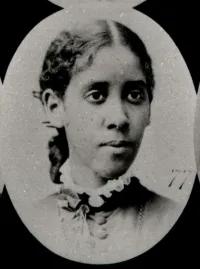
1885: Sophia Bethena Jones becomes the first Black woman to graduate from the U-M Medical School. She came to Michigan from Canada, frustrated with the University of Toronto’s limited medical training program for women. After graduation, she became the first Black woman to join the faculty of Spelman College, and established its nurse training program before going on to practice medicine in St. Louis, Philadelphia and Kansas City. In 1913, she wrote a powerful journal article on the state of public health for Black Americans 50 years after Emancipation.
1889: When the Medical School opens a new dedicated building for anatomical training, it includes a separate area for female students – informally known as “hen medics.” May B. Stuckey, a member of the class of 1890, is hired as the "Lady Assistant Demonstrator of Anatomy" to teach the entering students.
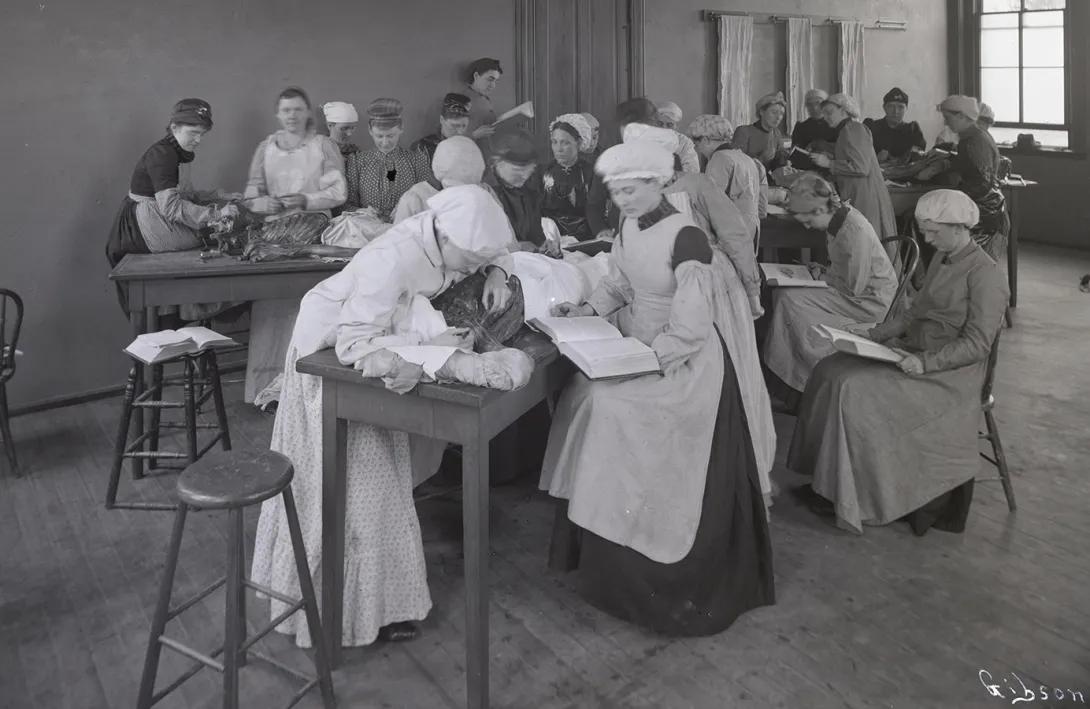
1890: Alpha Epsilon Iota, a professional society for women in medicine, was established at U-M by medical students and alumni. It grew to 31 chapters across the country before dissolving in 1963 once medical societies were open to female physicians and medical students.
1891: The Board of Regents approved the creation of a Training School for Nurses at the newly opened hospital complex on Catherine Street, under the Medical School’s umbrella. The first six students, all women, enroll the same year. The forerunner of the School of Nursing, it became a degree-granting program in 1919.
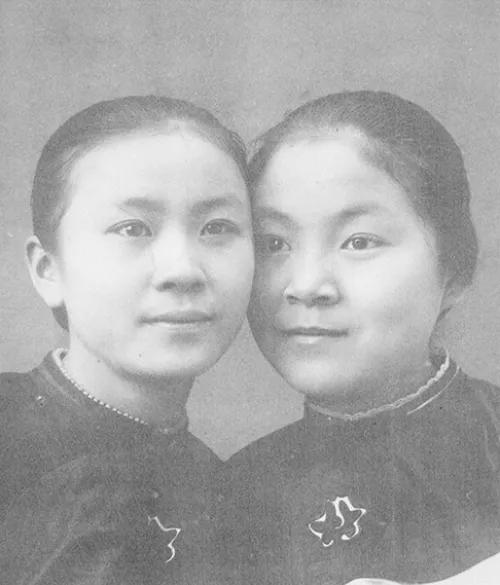
1892: The first Chinese students admitted to U-M, Mary Stone (Shi Meiyu) and Ida Kahn (Kang Cheng), begin their studies in medicine. After graduation in 1896, they returned to China and were leaders in running hospitals providing Western medical care. They were the inspiration for the Barbour Scholars, a program founded in 1917 by a former Regent that continues today, and funds opportunities for women from Asia and the Middle East to study in scientific fields at U-M at the graduate level.
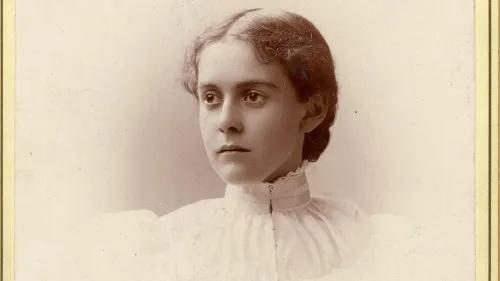
1893: Alice Hamilton, who would go on to become the first female professor at Harvard University and a national leader of the new field of occupational health, graduates from U-M with her medical degree. She later wrote, “as a doctor I could go anywhere I pleased—to far-off lands or to city slums—and be quite sure I could be of use anywhere.”
1897: Edna Day receives U-M’s first master’s degree in hygiene, the Medical School program that was the forerunner of today’s School of Public Health.
1898: Though she had not attended U-M's Medical School nor even set foot in Michigan, New York physician Elizabeth Bates, M.D., bequeathed part of her estate to the school in honor of its pioneering decision to allow women to study medicine together with men. Her gift, which established U-M's first named professorship and the first professorship of obstetrics and gynecology in the country, was directed toward advancing the care of women and children.
With Ann Arbor’s Black population beginning to boom, Katherine Crawford, M.D. sets up her medical practice on Fuller Street – one of about 150 licensed Black female physicians in the country.
1900: After 30 years of women studying medicine at U-M, 394 women had graduated with medical degrees. Women made up 20% of the graduating class this year, but by 1910 it had dwindled to 2% as more medical schools opened to women. Later, an official quota meant that it stayed below 10% through the 1930s.
1902: The Women’s Research Club formed, because women had been refused entry into the Junior Research Club founded for younger teaching and research staff. Lydia Maria DeWitt, M.D., an 1898 Medical School graduate who had joined the faculty as a histology researcher and teacher after graduation, was elected the first president. The club provided an environment for women who conducted scientific research, or were pursuing scientific studies, to present and discuss their work. DeWitt rose to associate professor before leaving for another institution, and worked to isolate the islets of Langerhans cells from the pancreas.
1907: After decades years of sex-segregated anatomy classes and labs, the last restriction is dropped, and female students are allowed to learn through anatomical dissection alongside male students.
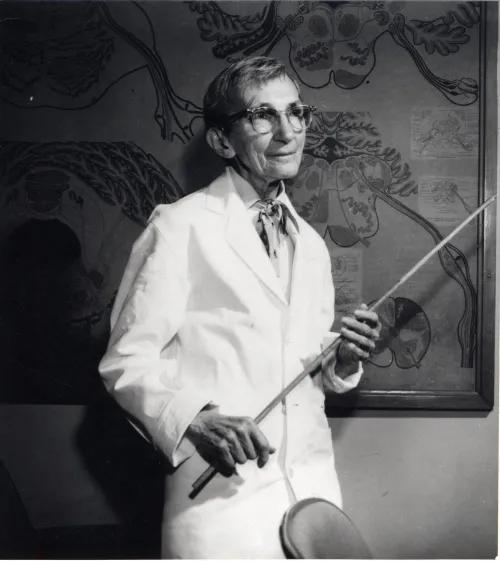
1920: Elizabeth Crosby, Ph.D., joined the Medical School anatomy faculty, and in 1936 became the first woman to become a full professor. She taught and performed advanced research in neuroanatomy at U-M until 1963, and received the National Medal of Science in 1980.
1924: Marjorie Franklin enrolls as the first Black student at the U-M Hospital School for Nurses. She was initially denied university-provided housing because of her race, but fought for the right to live on campus and was allowed to live in the new Couzens Dormitory when it opened in 1925.
1934: Kathleen Shingler Weston, M.S., M.D., graduates from the Medical School with her master’s degree in anatomy and genetics, and goes on to become a physician and prominent toxicologist who worked on the Salk polio vaccine at the Parke-Davis pharmaceutical company.
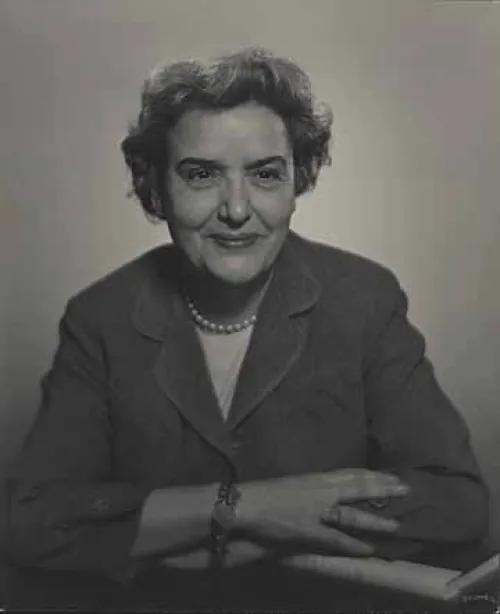
1940: Rhoda Reddig Russell, M.A., R.N., arrives at U-M as the new director of the School of Nursing and Nursing Service, then a part of the University Hospital. After the school became its own academic unit, she became its dean, and U-M's first female dean of any school or college, in 1955. By the time she retired in 1973, the school had become one of the largest in the country, and had launched several graduate-level education programs and research efforts.
1957: Frances Bull, M.D., a 1952 graduate of the Medical School, becomes head of the University Hospital's cancer chemotherapy unit. She becomes the head of the Department of Internal Medicine's medical oncology section, and a full professor, in the 1970s, and led the founding of an oncology training program. She won numerous awards for teaching before achieving emerita status in 1992.
1959: After finishing residency at U-M, polio survivor Donita Sullivan, M.D., joined the Medical School faculty as one of the nation's first pediatric rheumatologists. She treated thousands of patients through her career before achieving emerita status in 1996. An endowed chair is now named for her.
1967: Martha Ludwig, Ph.D. joins the faculty of the Medical School in what was then called the Department of Biological Chemistry and becomes a leader in the new field of X-ray crystallography; she later becomes the first female, and one of the only, Medical School faculty elected to both the National Academy of Medicine and the National Academy of Sciences.
1970: The Medical School faculty has 481 men on the instructional (tenure) track, compared with 64 women, most of whom are at lower ranks. Less than 10% of graduating medical students are women.
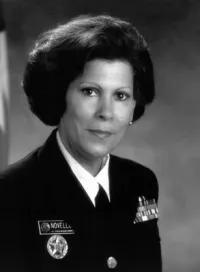
1972: After the introduction of a common medical school application for the U.S. and federal and local programs to encourage women and members of underrepresented groups to enter medicine, the incoming medical school class is 21% female. Also around this time, the Galens honorary medical society began allowing women as full members, and not just participants in its annual "Smoker" musical.
1974: Antonia Novello, M.D., trains in nephrology and pediatrics as an intern and resident at U-M. She went on to become the first female and first Latinx Surgeon General of the United States.
Rowena Matthews, Ph.D., joins the Medical School faculty, and goes on to co-discover the gene for methylenetetrahydorofolate reductase (or MTHFR for short), a critical enzyme in the body's ability to make proteins. She and Ludwig worked together to identify a mutation that makes some people less able to produce this enzyme. She was also elected to both the NAM and NAS.
1981: Alexa Canady, M.D., a member of the U-M medical class of 1975, completes her residency training at the University of Minnesota and becomes the first Black female neurosurgeon in the United States.
1992: Marilyn Roubidoux, M.D., joins the Radiology department as a faculty member. A member of the Sioux and Iowa nations of Native Americans, she develops a special focus on breast cancer detection and disparities, especially among Indigenous populations.
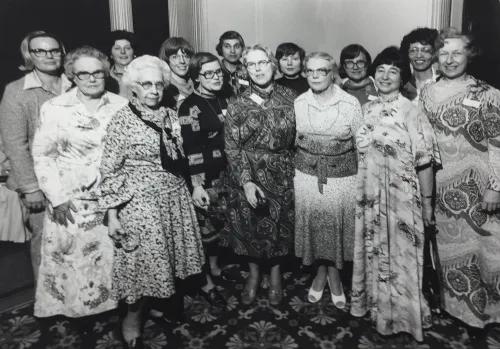
1994: Rhetaugh Graves Dumas, Ph.D., is named the vice provost for medical affairs, overseeing the clinical operations of the academic medical center.
1999: Zelda Geyer-Sylvia becomes executive director of M-CARE, the HMO insurance plan founded by U-M in 1986. The plan is sold to Blue Cross Blue Shield of Michigan in 2006.
The Women's Research Club, founded in 1902 when women were excluded from U-M's main research discussion groups, dissolves.
2003: Valerie Castle Opipari, M.D., is named chair of Pediatrics, the first woman to chair a U-M Medical School department. She served for 15 years, and helped lead the design and opening of the new C.S. Mott Children's Hospital that opened in 2011. She is now a professor emerita and there is a named chair in her honor.
2004: Karin Muraszko, M.D., becomes the first woman chair of an academic neurosurgery department in the nation. In 2023, she becomes the first recipient of the U-M Medical School Advancing Women in Academic Medicine and Science Award named for her; it honors individuals who have demonstrated impact in advancing women as a mentor, sponsor, advocate or role model for women.
2009: Ora Hirsch Pescovitz, M.D., becomes U-M's first female Executive Vice President for Medical Affairs, overseeing Michigan Medicine which includes the Medical School, the clinical entity now known as U-M Health and supporting operations and affiliations. She served for five years, and later became president of Oakland University.
A report on the status of women at the university notes that as of 2007, 80% of the staff in the hospitals and health centers (the clinical entity now known as U-M Health) were women, and that staff occupations that were once male-dominated now included a large percentage of women.

2023: Huda Akil, Ph.D., a neuroscientist and former co-director of what is now known as the Michigan Neuroscience Institute, wins the National Medal of Science, only the fourth U-M faculty member to receive the presidential honor. She has also been elected to both NAM and NAS.
2024: 48% of the approximately 4,000 Medical School faculty are female, with a majority of them (55%) on the clinical faculty track. Nearly a third of the school's department chairs are women. Both percentages are ahead of national averages. However, there are still disparities by faculty rank, distribution of endowed chairs and satisfaction.
Of the incoming graduate students in the biomedical sciences, 63% identify as female and 1% as nonbinary. Of incoming medical students, 54% identify as female and 4% as nonbinary.
For more about the history of what we now call Michigan Medicine, visit http://michmed.org/history
Credit for most of the images in this article: Bentley Historical Library
Sources for the article include: Medicine at Michigan: A history of the U-M Medical School at the Bicentennial by Joel Howell and Dea Boster; the writings of Kim Clarke and James Tobin; Medicine at Michigan magazine, and other sources.
Media Contact

Public Relations
Department of Communication at Michigan Medicine
Related
From the Diag to the world: 175 years of U-M medical history
175 years of U-M medical history come alive in museum exhibit
Featured News & Stories
Study outlines a new framework for direct cell reprogramming
Engineered nanoparticles sensitize gliomas to radiotherapy

The Care Ecosystem: Supporting People Living with Dementia and Their Families

Uncovering cellular stress signal triggered by Salmonella
U-M Regents approve Michigan Medicine leadership changes