
More articles about: Rheumatology

Health Lab
Single-cell RNA sequencing gives insight to dermatomyositis treatment
Comparing skin lesions in dermatomyositis and lupus using single-cell RNA sequencing gives rheumatology researchers at University of Michigan Health new insight into treatment targets for dermatomyositis patients.

Philanthropy News
Compassionate gifts turn heartbreak into hope
Margie and Tillman Dozier are honoring their daughter, Daria, through their generous support of critical care nursing and the Department of Rheumatology at Michigan Medicine.
Health Lab
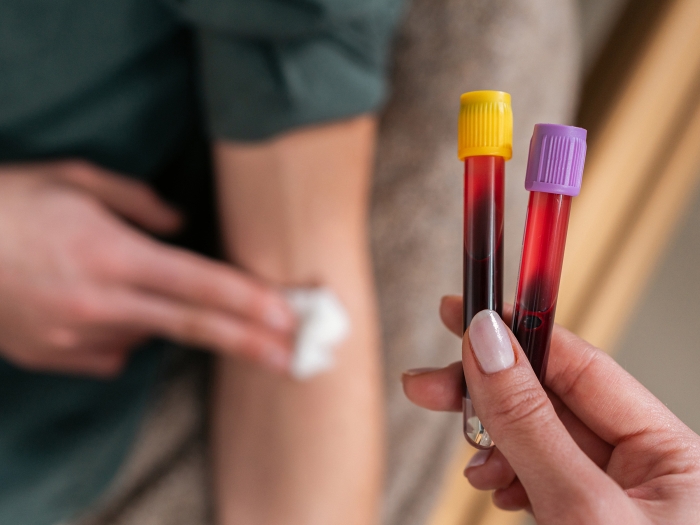
Using gene expression in blood to personalize care for APS
Antiphospholipid syndrome looks different in every patient. By using whole-blood RNA sequencing and machine learning, University of Michigan Health researchers reveal distinct immune patterns that may pave the way for personalized treatment.

Health Lab
For scleroderma research, patients seen as essential co-creators
As scleroderma research moves forward, involving patients with scleroderma in clinical trials can give researchers insight into what is most important for patients living with the condition.

Health Lab
Radiation therapy for non-cancer diseases
An expert discusses the long time usage of radiation therapy for non-cancer diseases in other countries that are now available in the United States.

Health Lab
Cracking the code on APS vasculopathy
Antiphospholipid syndrome vasculopathy is often overlooked in patients and can result in organ failure. Researchers at University of Michigan Health uses skin biopsies to pinpoint features in blood cells that give insight to the condition.

News Release
U-M Health’s Ann Arbor hospitals recognized as No. 1 in Michigan, among best in nation by U.S. News & World Report
University of Michigan Health’s Ann Arbor adult hospitals were ranked best in Michigan and in the top 20 in the nation by U.S. News & World Report Best Hospitals rankings for 2025-2026.

Health Lab
Inside antiphospholipid syndrome: a patient's personal health journey
Antiphospholipid syndrome can cause many complications in the body making daily tasks difficult. With comprehensive medical care at University of Michigan Health, one patient is taking control of his diagnosis.

Health Lab
A scleroderma clinical trial brings a better quality of life for one participant
The CAR-T treatment has been used in cancer patients for years. Now the approach is being used for those with severe scleroderma to teach the body to fight the autoimmune disorder.

Health Lab
How neutrophil calprotectin unmasks future atherosclerotic heart disease risk
The immune system is showing evidence of playing a roll in the emergence of atherosclerotic cardiovascular disease. A rush of neutrophils, or immune cells to the site could be an explanation for how this condition forms as well as how to prevent this heart disease in the future.

Health Lab
Protein found in rheumatic diseases causes inflammation in COVID-19 patients
Research on the inflammatory mediator called sCD13 has identified this molecule and its receptors as new targets for treatment of autoimmune rheumatic diseases. The data suggests that sCD13 may also be of great importance in severe complications of COVID-19.

Health Lab
Using ultrasound technology to quickly diagnose giant cell arteritis
Ultrasound technology at University of Michigan Health is helping diagnose giant cell arteritis in patients to begin potentially moving away from using invasive surgical biopsy methods.

Health Lab
Topical Mupirocin lowers lupus inflammation
J. Michelle Kahlenberg, M.D., Ph.D., led a team of researchers looking at an alternative treatment for lupus rashes with a topical treatment called mupirocin.

Health Lab
Targeting and blocking sCD13 protein could lead to systemic sclerosis treatment
Targeting and blocking the sCD13 protein from interacting with the B1R protein can pave the way for new fibrosis and systemic sclerosis treatments.

Health Lab
Could targeting metabolism treat blood clots in antiphospholipid syndrome?
A research team is investigating how metabolism – the process by which cells turn sugars, fats and proteins into energy – is used to make NETs in regards to antiphospholipid syndrome.
