
More articles about: Kellogg Eye Center
Philanthropy News
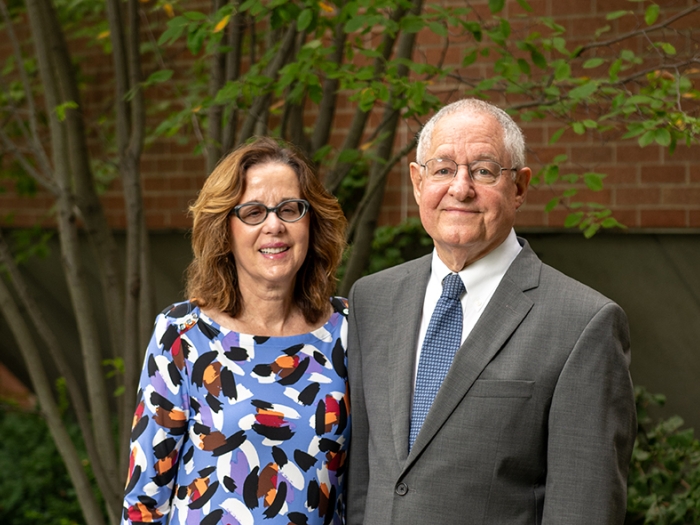
Susan J. Lane: Gratitude and Giving
Susan Lane has made a transformational gift to the Department of Ophthalmology and Visual Sciences at Michigan Medicine to support corneal research and patient education.

Philanthropy News
March Hoops to BEAT Blindness Marks 20 Years of Community Support for Vision Research
Annual community fundraiser celebrates NCAA basketball excitement while supporting critical vision research at the University of Michigan Health W.K. Kellogg Eye Center.

Health Lab
Doctors restore patient’s vision with progressive eye disease
Michael Budd was diagnosed with Fuchs’ dystrophy and underwent surgery at Kellogg Eye Center, which fixed his vision issues.

Health Lab
How do spaceflights and long term planetary missions affect vision?
Joshua Ong, M.D., resident physician at University of Michigan Kellogg Eye Center answers questions about how spaceflight affects vision and what protective measures astronauts use.

Health Lab
Treating a rare eye condition in a 7-year-old
Charlotte Dengler was diagnosed with an eye lesion that compromised her vision and underwent surgery at Kellogg to remove the lesion and now her vision is being slowly restored.
Health Lab
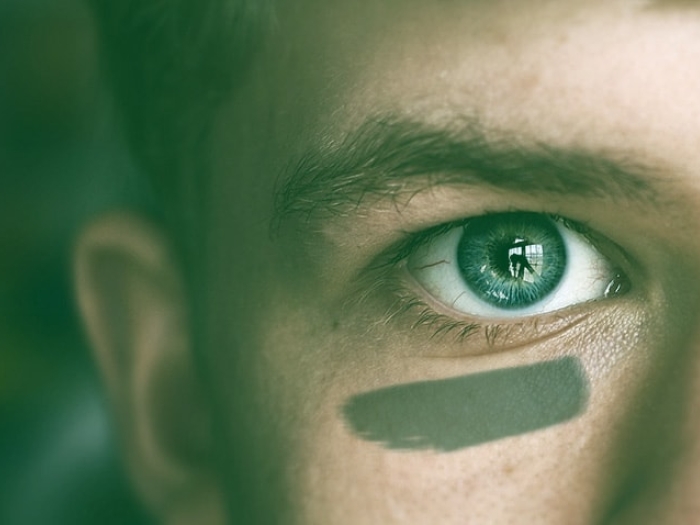
How LASIK surgery can help athletes perform at their best
Laser eye surgery can help improve athletic performance. Learn about LASIK eye surgery, including what to expect, side effects, and typical recovery times.
Health Lab
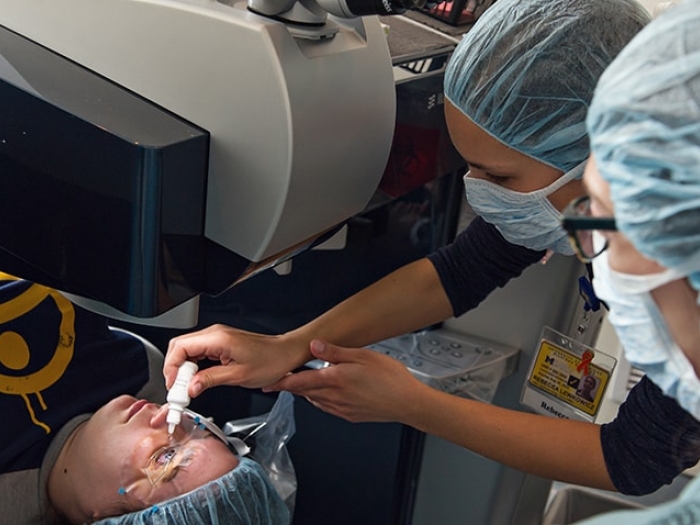
LASIK vs. PRK: Which vision correction surgery is right for you?
Both eye surgeries have the same intent — though they are different. A Michigan Medicine ophthalmologist explains how he helps patients make the best choice.
Health Lab
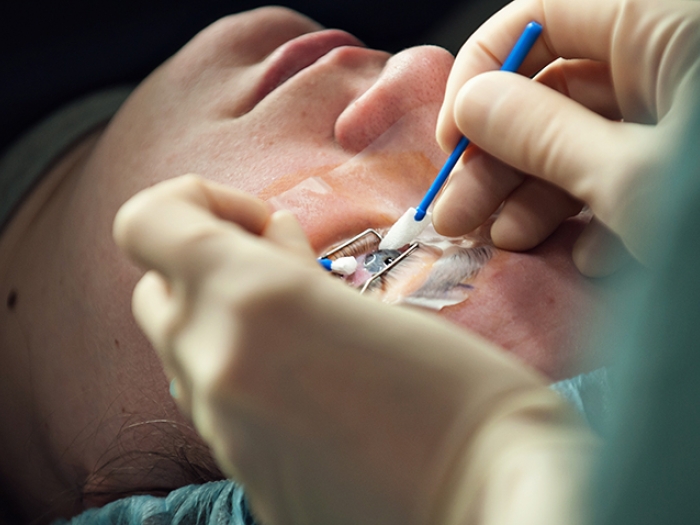
Pros and cons of LASIK: Are the risks worth the cost?
Deciding to get LASIK surgery requires thought and evaluation. Here’s what an ophthalmologist tells prospective recipients.

Health Lab
Olympic vision: strabismus, coloboma and eyeglasses on the world stage
Olympic gymnast Stephen Nedoroscik, affectionately dubbed “pommel horse guy” by the internet,has strabismus and coloboma, eye conditions that impact his vision. As Team USA continues to celebrate Nedoroscik and his Clark Kent-style frames, Christopher Gappy, M.D., shares more about strabismus, coloboma and Nedoroscik’s impact on public perception of glasses.

Health Lab
How to protect your eyes during the total solar eclipse
A Michigan Medicine ophthalmologist and retinal surgeon shares advice for viewing the total solar eclipse safely, including what to look for in eye protection.

Minding Memory
Vision Impairment as a Risk Factor for Dementia
The population of older adults living with dementia is expected to swell to nearly 14 million by 2050 and is estimated to cost the US economy more than 500 billion each year. In the absence of a cure for Alzheimer's disease, the primary cause of dementia, there's interest in understanding modifiable risk factors. In theory, getting a handle on the modifiable risk factors for dementia, would enable public health efforts to reduce cognitive decline in dementia at the population level. We've come a long way in understanding the risk factors for Alzheimer's disease and other related dementias. However, there's still work to be done. In this episode, we'll speak with Dr. Josh Ehrlich, a researcher at the University of Michigan, who has examined vision impairment as a risk factor for dementia.

Health Lab
Youth value eyesight but face key barriers to getting eyeglasses
Michigan Medicine research shows that a few key barriers stop young people from getting the glasses they need.
Health Lab
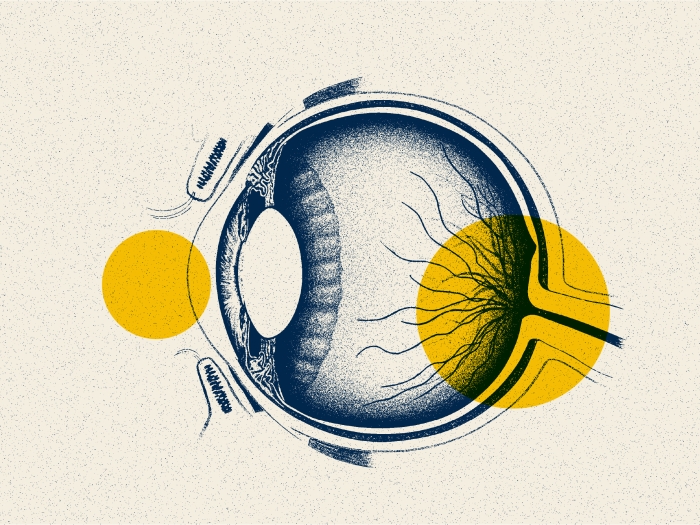
Treating dry age-related macular degeneration: 6 things to know
Answers about the treatment of age-related macular degeneration, otherwise known as dry AMD, from a Michigan Medicine ophthalmologist.
Health Lab
Cataract surgery reimbursements may not be enough for some patients
For complex cataract surgery, Medicare reimbursements are far lower than a simpler form of the surgery.
News Release
$11.5 Million gift fuels innovation in dry age-related macular degeneration research
Age-related macular degeneration (AMD) is the leading cause of irreversible blindness in people over 50. An $11.5 million gift to the University of Michigan Health W.K. Kellogg Eye Center aims to change that.
