Shooting for the Moon

Vice President Joe Biden recently held a national summit about the Cancer Moonshot, a proposed $1 billion White House initiative to accelerate cancer research. The language and media attention around this effort calls to mind similar highly publicized initiatives, including President Richard Nixon's War on Cancer in 1971. But what do these hype-heavy programs really mean to cancer researchers? What do they mean for patients? And how do they influence or impact the work going on in the field? Four U-M faculty members share their thoughts.
"Overall, it's a really wonderful idea. What I am cautious about is … the hype that we know everything we need to know about cancer, and that all we need to do is assemble $1 billion and the problem is solved. Cancer is very complicated. We have made wonderful progress over the last four years, but there is still a lot of work to do."
Theodore (Ted) Lawrence, M.D., Ph.D.
Isadore Lampe Professor of Radiation Oncology
Chair of Radiation Oncology
"Developing a drug to tackle cancer is unfathomably more complex than putting a man on the moon. I am frequently asked, 'When are we going to cure cancer?' The answer is, 'We already do, just not enough of them.' We need a better health information technology infrastructure to transform cancer care and improve patient outcomes, and that is where we should put our Cancer Moonshot focus."
Daniel Hayes, M.D.
Stuart B. Padnos Professor of Breast Cancer Research
Co-director of the Breast Oncology Program
Professor of Internal Medicine
"[The Moonshot] is trying to provide mechanisms for sharing large sets of open access data, such as The Cancer Genome Atlas … for which I have been advocating for the last decade in my work with the endocrine oncology community. I'm delighted that it's calling for … deep interaction between public and private sectors. [C]ollaboration is essential, and the U-M is very interested in translating our discoveries in that space."
Gary Hammer, M.D., Ph.D.
Millie Schembechler Professor of Adrenal Cancer
Director of the Endocrine Oncology Program
Professor of Internal Medicine, of Molecular and Integrative Physiology, and of Cell and Developmental Biology
"I'm excited that there is this level of enthusiasm about tackling an incredibly complex problem. [But] I'm a bit wary that a lot gets lost when you hear words like 'war' and 'moonshot.' The language is so definitive, and it implies definitive outcomes. … I think, particularly as someone who sees how vulnerable our patients and their families can be, we should exercise caution at every level so we don't oversell [the Moonshot initiative]."
Pavan Reddy, M.D. (Fellowship 2001)
Moshe Talpaz, M.D., Professor of Translational Oncology
Deputy Director, U-M Comprehensive Cancer Center
Professor of Internal Medicine
Featured News & Stories
Comprehensive DNA sequencing reveals hidden drivers of cancer
‘Molecular glue’ stabilizes protein that inhibits development of non-small cell lung cancer and uterine cancer
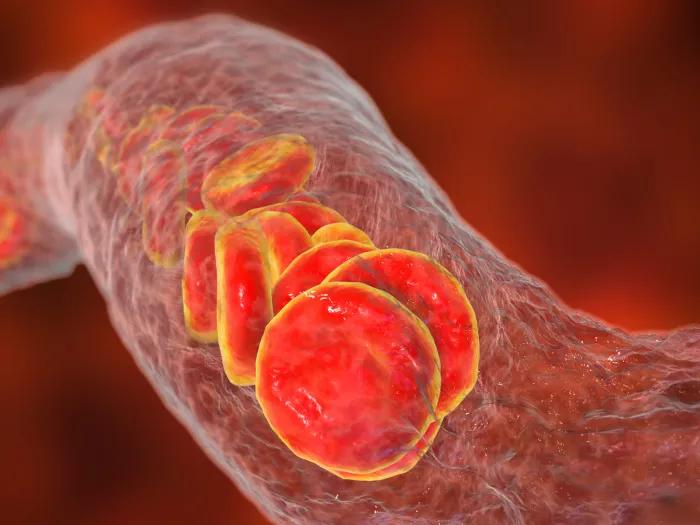
FDA-approved drug offers hope for patients with polycythemia vera, a rare bone marrow disorder
Pediatric patient treated for rare kidney cancer
Rare cancer diagnosis inspires community of support